
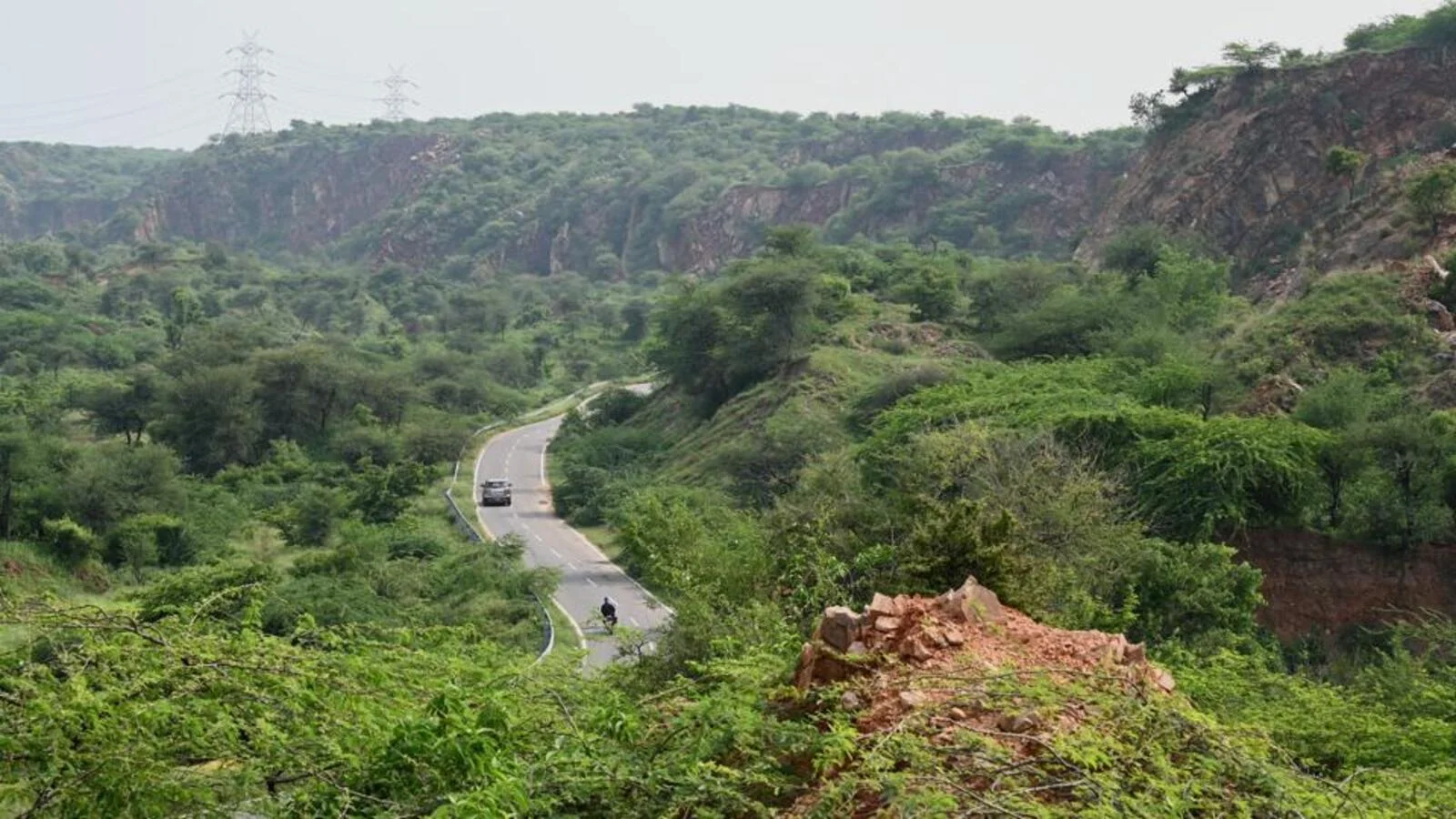
New Delhi, June 6: Prime Minister Narendra Modi on Thursday kickstarted the symbolic launch of the Aravalli Green Wall initiative, a massive ecological restoration project aimed at halting desertification by reviving the fragmented Aravalli forest belt.
The first phase of the project, drawing inspiration from Africa’s Great Green Wall, envisions a continuous green corridor from Porbandar in Gujarat to Rajghat in Delhi. Haryana — which houses nearly 40 percent of the Aravalli range — is expected to play a pivotal role in this ambitious undertaking.
“Restoring the Aravallis is not just an environmental commitment; it’s a national imperative,” said Forest Minister Rao Narbir, as the state simultaneously commenced groundwork in five key districts. “We will reverse the damage done to the Aravallis over the years by reviving the forest with native species. We will restore the natural boundaries of the forest,” he added.
The Haryana segment of the project will target 24,990 hectares of degraded land identified within the recorded forest areas (RFAs) of Gurugram, Faridabad, Nuh, Rewari, and Mahendragarh. These districts form a critical ecological buffer against the encroachment of the Thar Desert into northwest India.
GIS-based mapping has outlined a total of 33,706 hectares across these districts, out of which nearly 75 percent is marked as degraded. Nuh district contains the largest portion of degraded forest land to be restored — 9,839 hectares — followed by Gurugram (6,063.7 ha), Faridabad (3,852.7 ha), Rewari (3,087.9 ha), and Mahendragarh (2,146.2 ha). Charkhi Dadri, the sixth Aravalli district in Haryana, was excluded from this phase as its forest cover remains relatively intact.
The restoration in Haryana will unfold over a three-year period. Authorities will begin with soil and water conservation activities, laying the foundation for subsequent plantation of 15–20 native tree species at each site. The strategy is designed to stabilize the terrain, enhance moisture retention, and allow for natural forest regeneration.
The Aravalli range — stretching from Gujarat through Rajasthan and Haryana before ending in Delhi — serves as the final natural barrier holding back desert winds from sweeping further east. Its protection is seen as essential to India’s long-term climate resilience and groundwater recharge efforts.
Launched officially in 2023 by the central government, the Aravalli Green Wall project aims to revive 1.1 million hectares of degraded land by 2027.
“The work has begun,” Rao Narbir said, “and with community support and careful planning, the Aravallis will thrive again.”
