
Chandigarh, June 21: The Punjab and Haryana High Court has delivered a scathing indictment of the Haryana government’s prolonged inaction in completing the forest settlement process for the Morni Hills, calling it a “lamentable illustration of classic administrative lethargy.” The Court has ordered that all pending survey and demarcation work be immediately transferred to the Forest Settlement Officer (FSO), who must submit a report without delay.
A Bench comprising Chief Justice Sheel Nagu and Justice Sumeet Goel, while citing the Indian Forest Act, 1927, held that “the entire exercise of survey and demarcation being done by revenue authorities is required to be handed over to the FSO already appointed.” The ruling categorically rejected the state’s argument that these functions fall solely within the domain of revenue officials.
The judgment came during the hearing of a petition filed by Vijay Bansal, who had challenged the state’s inaction and emphasized the need to recognize Morni block residents as traditional forest dwellers. “From all angles and for all intents and purposes, these people meet the definition,” the petition asserted, criticizing both political and administrative establishments for failing to uphold social, economic, and political justice.
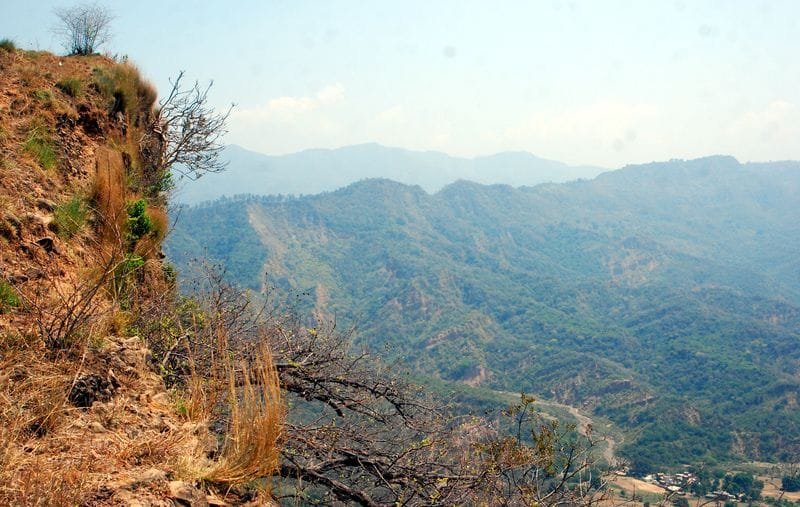
Calling attention to the environmental significance of Morni Hills, described by the court as “the lungs of the tricity,” the Bench stressed that a legal process initiated with a Section 4(1) notification of the Forest Act in 1987 must culminate in a Section 20 notification declaring the land as a reserved forest. Despite the initial notification having been issued on December 18, 1987, the state had failed to act for nearly 38 years.
“The procrastination exercised by the state government presents a lamentable illustration of classic administrative lethargy,” the Bench stated in its strongly worded order. “To permit nearly four decades to elapse without any discernible, substantive action flowing from a statutory declaration is, to put it mildly, an affront to the principles of effective governance and a manifest failure at the end of officers concerned, both statutory and constitutional.”
The Court did not stop at statutory obligations. It invoked Article 48A of the Constitution, which imposes a duty on the state to protect and improve the environment and safeguard forests and wildlife. The Bench added that this constitutional obligation is not a mere directive principle, but closely tied to Article 21, which guarantees the fundamental right to a clean and healthy environment. “Such inaction,” the Court observed, “directly violates a fundamental right.”
Responding to the state’s contention that demarcation duties fall outside the FSO’s jurisdiction, the Bench clarified: “A bare perusal of the 1927 Act reveals that power is vested with the FSO to, inter alia, conduct survey, demarcation, prepare maps, and act as a civil court.”
The Court ordered the FSO to begin work immediately and submit a comprehensive report. The state has been directed to issue a formal notification under Section 20 of the Indian Forest Act by December 31, 2025, declaring the scheduled land as a reserved forest. All records, maps, and documents currently with the Revenue and Forest Departments are to be transferred to the FSO, who is to be fully supported with the required infrastructure to complete his duties — including inquiry, entry, survey, demarcation, map preparation, land acquisition, and the exercise of civil court powers.
The Bench ruled that the interim stay on non-forest activities in the Morni Hills region, as per the 1987 notification, would remain in effect until the new notification is issued.
To ensure compliance, the Court has directed the Forest Secretary, Haryana, to file an affidavit confirming progress by the second week of January 2026. The Bench warned that any failure to adhere to this timeline could result in “punitive consequences.”
