
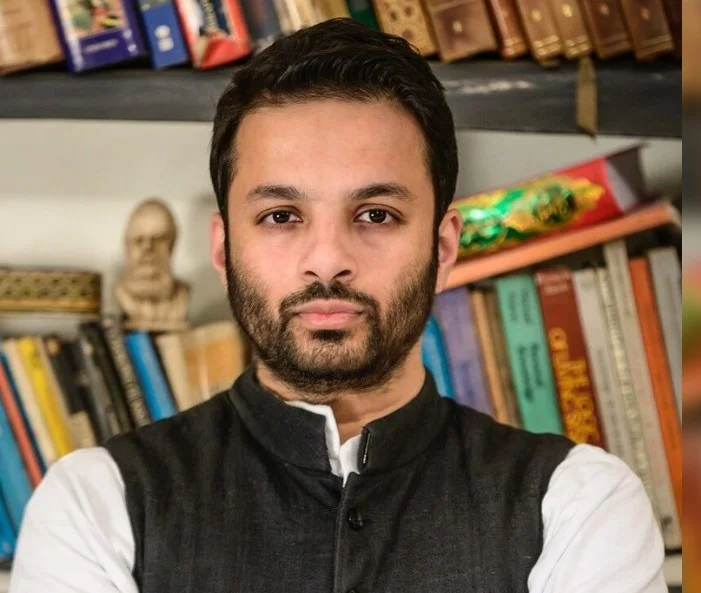
NEW DELHI, July 16: The Supreme Court on Wednesday sharply criticized the Haryana Police’s Special Investigation Team (SIT) for straying beyond the scope of its mandate in the case involving Ashoka University professor Ali Khan Mahmudabad, who was booked for his social media posts on Operation Sindoor.
A bench comprising Justices Surya Kant and Joymalya Bagchi said the SIT had “misdirected itself” by widening the scope of its investigation and seizing Mahmudabad’s electronic devices, including his mobile phones. “There was no occasion for such seizures,” the court observed, adding that the SIT should confine itself strictly to examining whether the two FIRs registered against Mahmudabad disclose any offence.
The apex court directed the SIT, headed by a senior Haryana Police officer, to submit a status report within four weeks based solely on the content of the two FIRs.
“The investigation must remain within the boundaries of the complaints filed. Expanding the probe beyond what is mentioned in the FIRs is not appropriate,” the bench said, while also noting that Mahmudabad had been fully cooperating with the investigation and should not be summoned again.
In a relief to the professor, the court also modified the interim bail condition imposed on May 21, allowing him to write articles, publish posts, and express opinions, except on the case currently under judicial consideration.
Mahmudabad was arrested on May 18 after Haryana Police filed two FIRs in Sonipat district, one based on a complaint by Renu Bhatia, chairperson of the Haryana State Commission for Women, and the other by a local village sarpanch. The complaints alleged that his posts on Operation Sindoor—an Indian military offensive—posed a threat to the “sovereignty and integrity of the country.”
While Mahmudabad was granted bail days later, the case has since drawn national attention, with academics and civil rights groups questioning the criminalisation of critical opinion.
The court’s remarks on Wednesday are likely to influence how state agencies handle cases involving freedom of expression, particularly on sensitive national security matters.
