
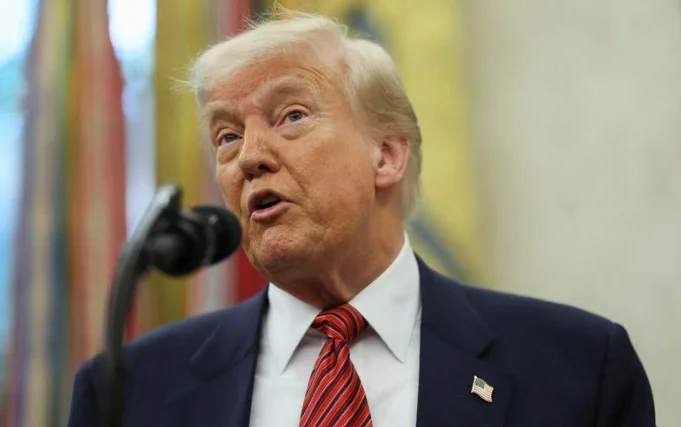
KUALA LUMPUR, Oct 25 — President Donald Trump departed Friday for a multi-nation tour of Asia aimed at renewing US partnerships and addressing long-standing trade issues, the White House said.
Trump’s first stop will be Malaysia, where he will arrive Sunday morning to attend the ASEAN Summit on October 26–27. Malaysia currently holds the chairmanship of the 10-nation bloc, making Kuala Lumpur the center of regional diplomacy this week.
“This trip will reaffirm America’s enduring role in the Indo-Pacific,” said White House Spokeswoman Karoline Leavitt. “President Trump will conclude his visit with a meeting with President Xi Jinping on October 30 in South Korea.”
In Kuala Lumpur, Trump will meet Malaysian Prime Minister Anwar Ibrahim for bilateral talks on Sunday, followed by a joint signing ceremony with the leaders of Cambodia and Thailand. Both nations have recently mended relations after a deadly border flare-up earlier this year.
Officials said Trump will later join a working dinner with ASEAN leaders, where discussions are expected to center on trade cooperation and regional security. His participation marks a return to the ASEAN process after several years of absence from 2018 to 2020.
Following the Malaysia leg, Trump will head to Japan for his first meeting with Prime Minister Sanae Takaichi, who took office last month. The leaders are expected to discuss defense coordination, trade deals, and semiconductor supply chains.
Trump’s tour will end in South Korea, where he will attend the Asia-Pacific Economic Cooperation (APEC) CEO Summit in Gyeongju. He is expected to meet President Lee Jae Myung and deliver remarks to business leaders, underscoring US engagement with Asia’s major economies.
The White House noted that Trump’s meeting with Chinese President Xi Jinping will focus on reducing trade tensions, expanding rare earth cooperation, and tackling fentanyl trafficking.
Through his engagements across the region, Trump aims to rebuild alliances and “negotiate fairer trade terms that benefit American workers,” Leavitt said.
Officials said the administration views this visit as a chance to reset the tone of US-Asia relations and strengthen economic ties amid intensifying global competition.
