
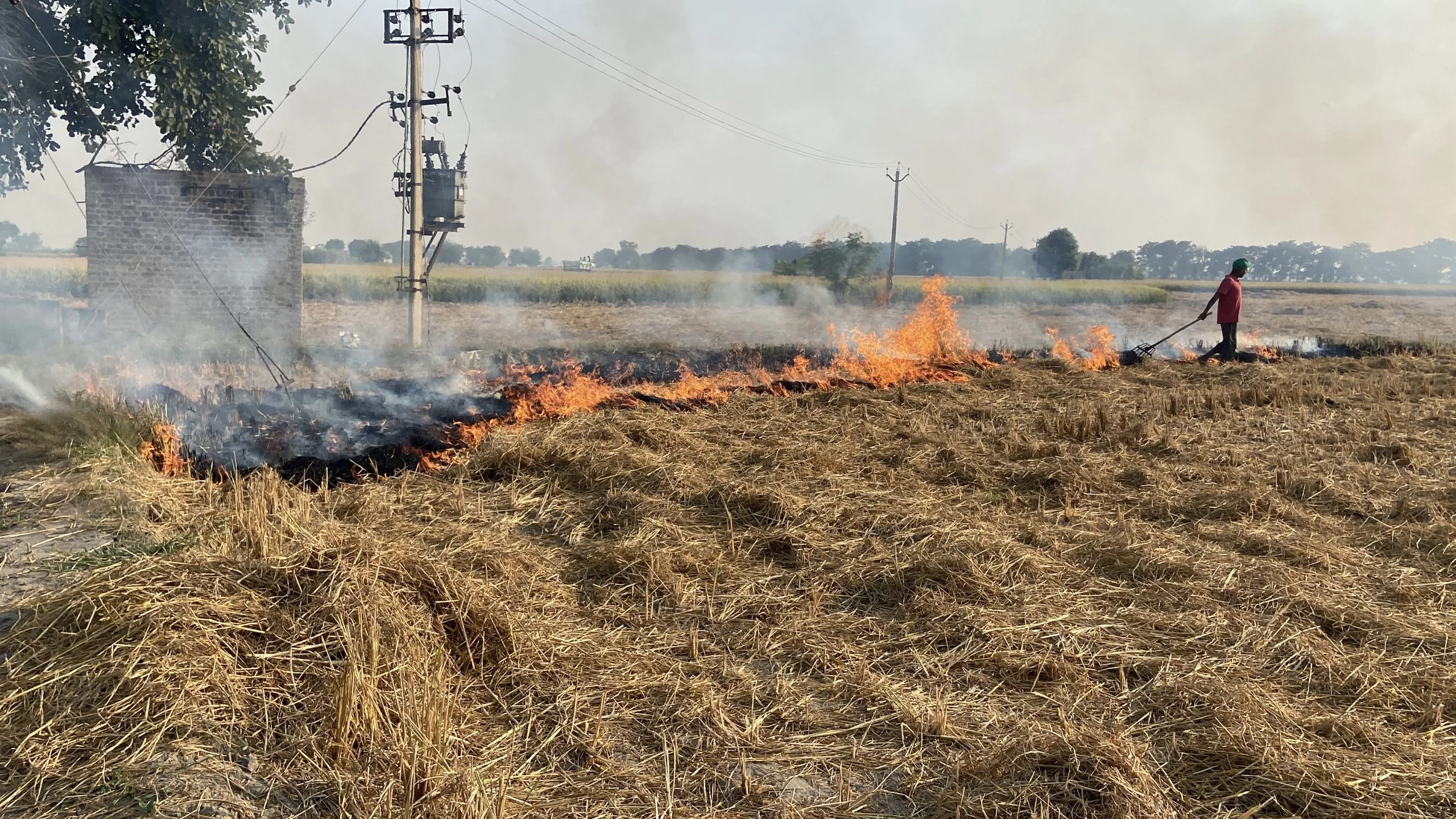
Chandigarh, November 10 — Punjab’s steady decline in stubble burning is being attributed to a mix of state-backed policies and farmer-led adaptation that turned crop residue from a liability into a source of income.
According to official data, the state recorded 71,300 incidents of stubble burning in 2021. The number dropped to 10,900 in 2024 and stands at 3,284 so far this year — an overall reduction of about 85 percent. The Commission for Air Quality Management (CAQM) described the trend as part of a “stubble revolution” led by Punjab’s farming community.
The change, officials said, followed a shift in government focus from penalties to incentives. The state invested in biomass collection networks, provided subsidies on residue management equipment, and linked farmers with power plants that now co-fire crop waste with coal. “Rice straw has become a source of income rather than a burden,” CAQM chairperson Rajesh Verma said after visiting the Rajpura Thermal Plant last week.
Under the biomass initiative, thermal plants across Punjab are purchasing farm residue to mix with coal as part of clean-energy measures. The policy has created a new market for agricultural by-products while reducing pollution linked to open burning.
State officials said awareness campaigns, machinery support, and village-level collection centers have encouraged more farmers to adopt the practice. “The idea was to make stubble management financially viable, not punitive,” a senior agriculture department officer said.
Environmental experts said Punjab’s approach could serve as a model for other grain-producing states struggling with seasonal air pollution. By targeting the problem at its source and involving farmers as stakeholders, Punjab has managed to combine cleaner air with improved rural income.
