
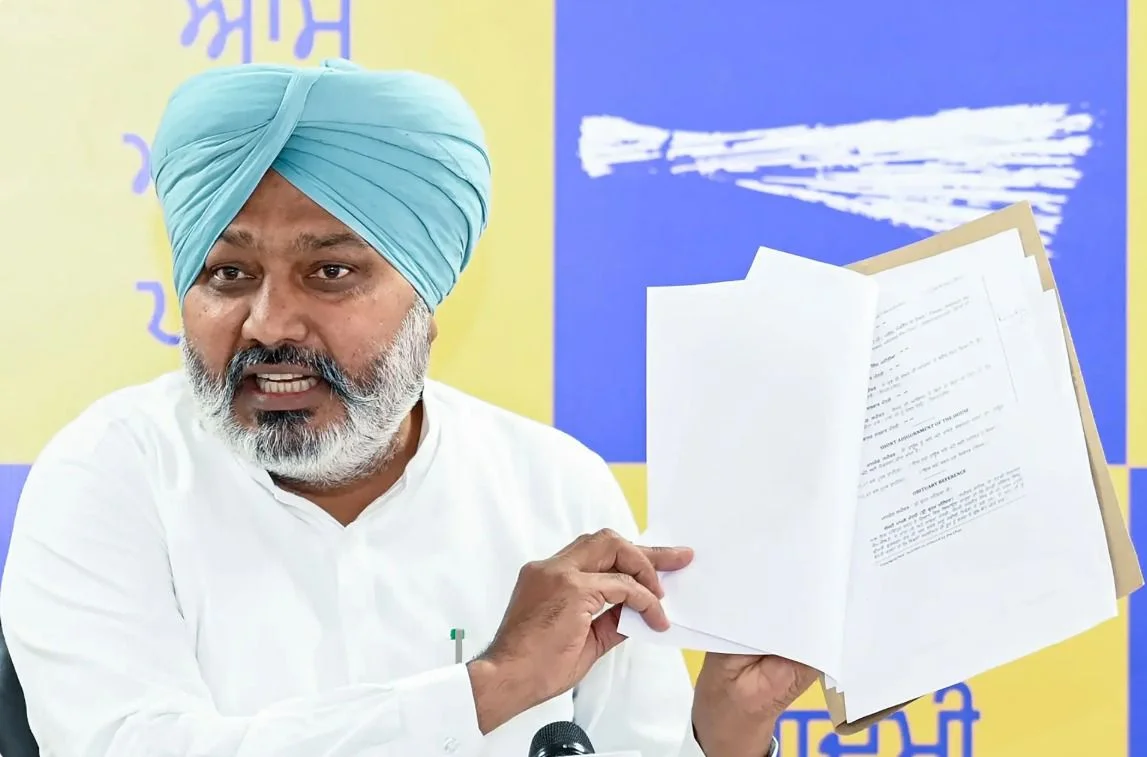
Chandigarh, November 17 — Punjab Finance Minister Harpal Singh Cheema announced that ₹332 crore has been released as the first installment for rural development, marking one of the state’s largest direct transfers to Panchayati Raj institutions. The amount has been deposited into the accounts of over 13,000 Gram Panchayats and other local bodies to start work without administrative delays.
Officials said the funding has two components. Gram Panchayats have received ₹156 crore as untied funds to choose works based on their priorities — ranging from internal roads, water supply and electrification to community facilities. Another ₹176 crore has been issued as tied funds for sanitation, waste disposal systems, community toilets and retaining ODF status.
Cheema said the mechanism is meant to give Panchayats control over planning and ensure that essential works are not stalled. “Stronger local activity will translate into better facilities and timely execution,” he mentioned.
On average, each Gram Panchayat has received ₹1.76 lakh as part of this installment. A second installment of around ₹334 crore is scheduled for the end of the financial year or early January, taking the total annual allocation close to ₹3.52 lakh per Panchayat.
The government said the release coincides with larger infrastructure plans, including ₹4,150 crore set aside for repairing 19,000 km of rural roads and ₹1,000 crore for new sports stadiums. Officials noted that the current focus covers roads, health, water, agriculture-related infrastructure, power supply and sports.
District-wise, Ludhiana received the highest share at approximately ₹33.40 crore, followed by Hoshiarpur with ₹28.51 crore and Gurdaspur with ₹27.64 crore. Other districts — including Sangrur, Patiala, Jalandhar, Firozpur, Fazilka, Moga, SBS Nagar, Sri Muktsar Sahib and Tarn Taran — have also been issued funds according to need and population density.
The distribution follows the 70:20:10 breakup among Gram Panchayats, Panchayat Samitis and Zila Parishads. Officials said monitoring will be carried out to track fund utilisation and prevent irregularities. The digital mode of transfer, they added, ensures that money reaches local bodies without intermediaries.
The sanitation component is expected to help villages maintain cleanliness systems and ODF status. Authorities said timely reporting and audits will continue through the current financial year.
