
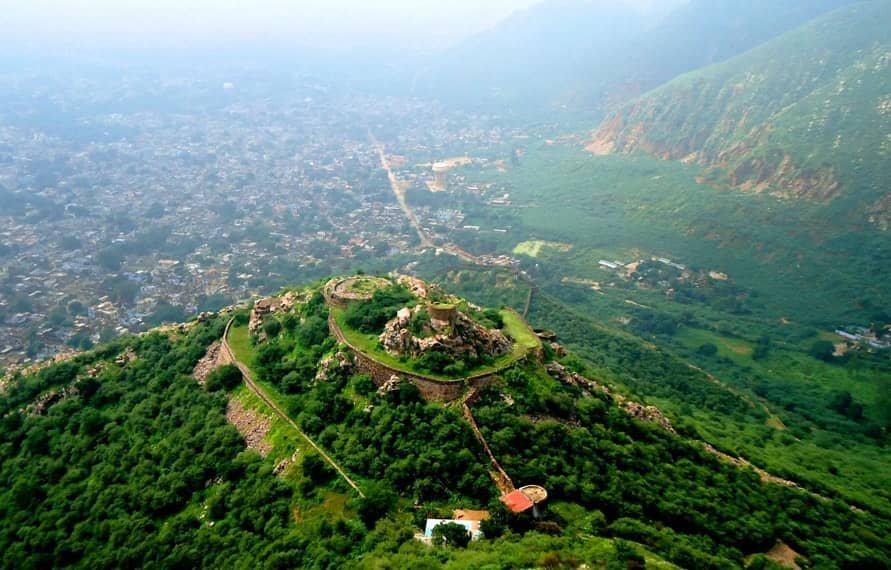
Chandigarh, Dec 27, 2025: The current controversy around the Aravalli hills began inside the Supreme Court, not on the streets.
For decades, the court has monitored mining in the Aravallis through landmark cases such as M.C. Mehta v. Union of India and T.N. Godavarman v. Union of India. During hearings last year, judges faced a basic problem: different states used different definitions of what counted as the Aravalli hills — and some had no definition at all.
This lack of clarity made enforcement difficult and allowed illegal mining to flourish. To fix this, the court asked a multi-agency committee to come up with a uniform definition.
The committee proposed a simple, elevation-based rule: only hills rising 100 metres or more above local relief should be counted as Aravallis. The Supreme Court accepted this definition and ordered the preparation of a Management Plan for Sustainable Mining, temporarily banning new mining leases until the plan is finalised.
While the court stressed that ecologically sensitive areas must still be protected, critics say the damage lies in what the definition excludes.
Low-elevation hills — many of them forested and ecologically crucial — may now fall outside the Aravalli category altogether. Experts point to Rajasthan, where a similar 100-metre rule was earlier used. A Supreme Court-appointed committee found that 31 Aravalli hills disappeared in 50 years due to mining, leaving large gaps in the range.
In Haryana, citizen reports have documented extensive degradation in districts like Bhiwani, Charkhi Dadri, Gurugram and Nuh, even after mining bans. These gaps have allowed desert dust from the Thar to move toward Delhi-NCR, worsening air pollution.
Environmentalists argue that the Aravallis are not just “hills” but a living ecological system. Their forests regulate wind speed, stabilise rainfall, improve humidity and recharge groundwater — estimated at nearly two million litres per hectare.
The concern driving today’s campaigns is that a technical legal definition could erase large parts of this system from protection, making them vulnerable to clearing and mining.
At stake is more than legal clarity. For many activists, the ruling represents a turning point where a line drawn on a map may decide whether the Aravallis continue to shield north India from heat, dust and water scarcity — or slowly disappear.
