
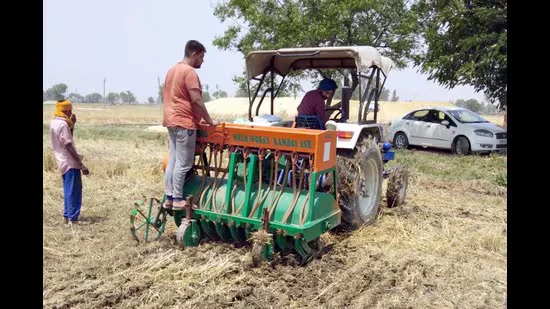
Chandigarh, Jan 30: Punjab is refining its strategy to curb farm fires by focusing on eight critical hotspot districts for the upcoming kharif season, following reports that a quarter of previously distributed crop residue machinery is no longer functional. The state agriculture department has identified Tarn Taran, Sangrur, and Ferozepur among the areas requiring intensive intervention. This targeted approach follows the disclosure to the Commission for Air Quality Management that 40,000 of the 1.58 lakh machines supplied since 2018 have become redundant due to wear and tear or technical obsolescence.
The effort to eliminate stubble burning has seen a substantial financial commitment, with 2,229 crore in subsidies allocated over the last six years. While fire incidents have seen a sharp decline from 49,922 in 2022 to just over 5,000 in 2025, the state aims to further reduce these numbers through a proposed 500 crore plan. This new phase of the program focuses on providing 15,000 modern agricultural implements to ensure farmers have the tools necessary for in-situ management of paddy straw.
“The average lifespan of these machines is about five years and rapid technological upgrades have also rendered many older models obsolete,” Punjab agriculture director Jaswant Singh noted. Explaining the shift in equipment preferences, he mentioned that “The Happy Seeder, which was widely used in 2018 and 2019, was replaced by the Smart Seeder, and now the Super Seeder is in use.”
The management of paddy residue is a complex task involving the handling of 190 lakh tonnes of straw within a very short timeframe. Previous years have seen challenges in tracking equipment, including a 2022 investigation where some machines were found missing or sold. However, officials are now looking forward, prioritizing the distribution of new technology to ensure the gains made in air quality are maintained and improved upon in the coming harvest cycles.
“The focus in the upcoming kharif harvest will be on eight hotspot districts, particularly villages that continue to burn paddy stubble,” Jaswant Singh directly said. The department remains committed to supporting farmers through the transition to modern machinery, especially in areas like Muktsar, Bathinda, and Mansa. The state government continues to coordinate with central authorities to secure the necessary funding and technical support for these environmental initiatives.
