
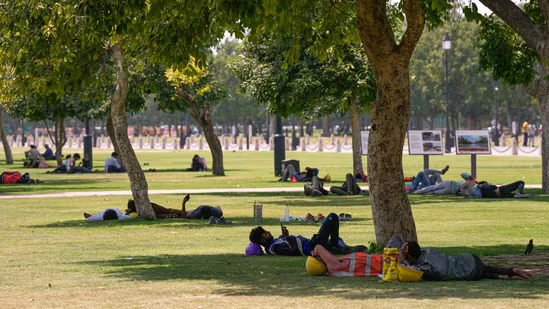
NOIDA, MAY 20 — Residents across Noida and Ghaziabad received urgent emergency broadcasts on their mobile devices Wednesday as federal authorities warned of extreme, life-threatening weather conditions developing across the National Capital Region.
The emergency notification, dispatched by the National Disaster Management Authority, categorized the approaching weather front using the phrase “loo se bhi bheeshan loo,” indicating a system of dry, arid winds significantly more severe than typical summer heatwaves. The specialized public warning covered multiple districts across Uttar Pradesh, including Gautam Buddh Nagar, Ghaziabad, Aligarh, Etah, Hathras, Kanpur Nagar, Mainpuri, Mathura, Mirzapur, and Bhadohi.
“The orange warning indicates a critical need to prepare for action,” an India Meteorological Department representative noted during a regional briefing. The agency stated that the prevailing atmospheric conditions are likely to disrupt daily routines and heighten public health risks over the next five days.
The localized alert coincides with an active orange heatwave advisory issued by the meteorological department for Delhi and its surrounding urban clusters. Regional observatories recently logged peak seasonal temperatures of 44.5 degrees Celsius, with meteorologists projecting maximum temperatures to reach 46 degrees Celsius by the weekend.
Weather monitoring stations indicated that predominant surface winds are currently originating from the northwest. Forecast models show these dry currents maintaining speeds of up to 20 kilometers per hour during peak afternoon hours, impacting broad swathes of Uttar Pradesh, Bihar, Rajasthan, and Odisha. Municipal corporations in the affected zones have advised residents to restrict outdoor exposure during peak thermal windows to minimize heat-related casualties.
