
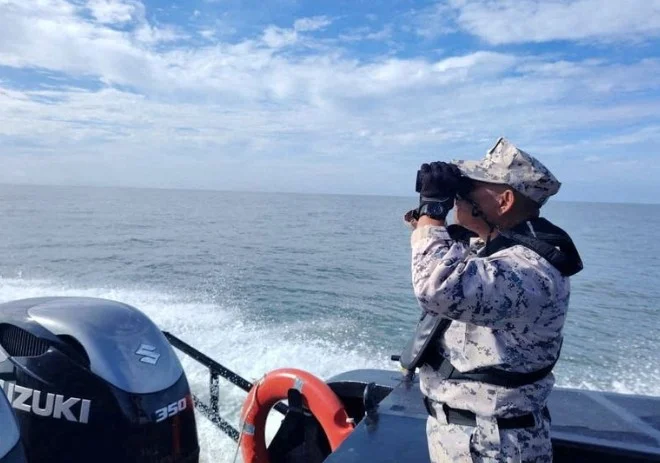
Langkawi, November 9 — The turquoise waters off Malaysia’s Langkawi island turned into a graveyard this week when a boat carrying desperate migrants from Myanmar capsized, killing at least seven and leaving many others unaccounted for. Thirteen were rescued — exhausted, hungry, and shaken — their stories echoing a tragedy that keeps repeating across the Andaman Sea.
Officials say the boat had left from Buthidaung in Myanmar’s Rakhine state, a region scarred by conflict and displacement. “The passengers were believed to have been split into three smaller boats near Malaysia,” said First Admiral Romli Mustafa of the Malaysian Maritime Enforcement Agency (MMEA). “One of them sank near Thailand’s Tarutao island, and some survivors drifted into Malaysian waters.”
As rescue teams scoured the sea for more bodies, villagers on Langkawi’s coast watched silently. “We saw small pieces of clothing and a slipper floating near the rocks,” said a local fisherman who helped in the early rescue.
Among those saved were Rohingya Muslims who said they fled persecution and poverty in Rakhine, hoping for work and safety in Malaysia. “We had little food, the boat was small, the waves were huge,” one survivor reportedly told rescuers.
The UNHCR estimates that over 5,200 Rohingya have attempted such journeys this year alone, with nearly 600 missing or dead. “This tragedy underscores the urgent need for coordinated regional search and rescue operations,” said UNHCR spokesperson Diogo Alcantara.
Malaysia, long seen as a safer haven because of its Malay Muslim majority, now hosts nearly 117,000 registered Rohingya refugees. Yet, as the government tightens its entry policies, more are pushed into the hands of traffickers and cross-border syndicates.
For many who board these boats, the sea is both hope and heartbreak — a path to freedom that too often ends in silence.
