
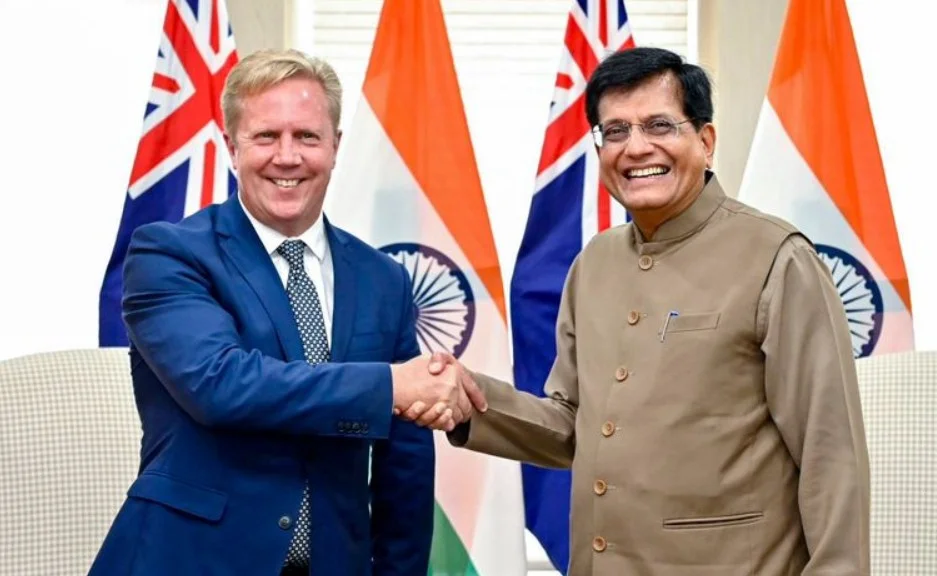
New Delhi, Dec 23: Indian students and professionals will gain expanded access to work opportunities in New Zealand following the conclusion of a free trade agreement between the two countries, officials said Monday.
The FTA negotiations have been formally closed, with the pact approved by the Union Cabinet and awaiting ratification by the New Zealand Parliament. The agreement is expected to come into force within the next seven to eight months.
A key feature of the pact is an annexure on student mobility and post-study work visas, signed by New Zealand for the first time with any country. The annexure provides Indian students with guaranteed 20-hour weekly work rights and removes numerical caps.
Commerce and Industry Minister Piyush Goyal said the agreement significantly expands post-study work options. “Students will be eligible for a two-year work visa for degree courses, three years for bachelor’s degrees with honours or STEM graduates, and four years for postgraduate studies,” he said.
The agreement also introduces a new Temporary Employment Entry Visa under the Skilled Employment Pathways framework, allowing up to 5,000 Indian professionals to work in New Zealand for a period of up to three years at any given time.
Goyal said beneficiaries would include professionals such as yoga instructors, chefs, Ayush practitioners, IT professionals, educators, nurses and caregivers.
The Commerce Ministry clarified that the new visa route would operate alongside existing pathways. “It does not replace or dilute current visa categories available to Indian nationals. Instead, it expands the overall mobility framework through a preferential, FTA-linked channel,” the ministry said.
In addition, New Zealand will issue multiple-entry Working Holiday Visas to 1,000 young Indians annually for a duration of 12 months.
The pact also includes annexures on health services and traditional medicine, as well as provisions for fast-tracking approval of Indian pharmaceutical products in New Zealand. “This will help Indian pharma capture a larger share of New Zealand’s imports,” Goyal said.
