
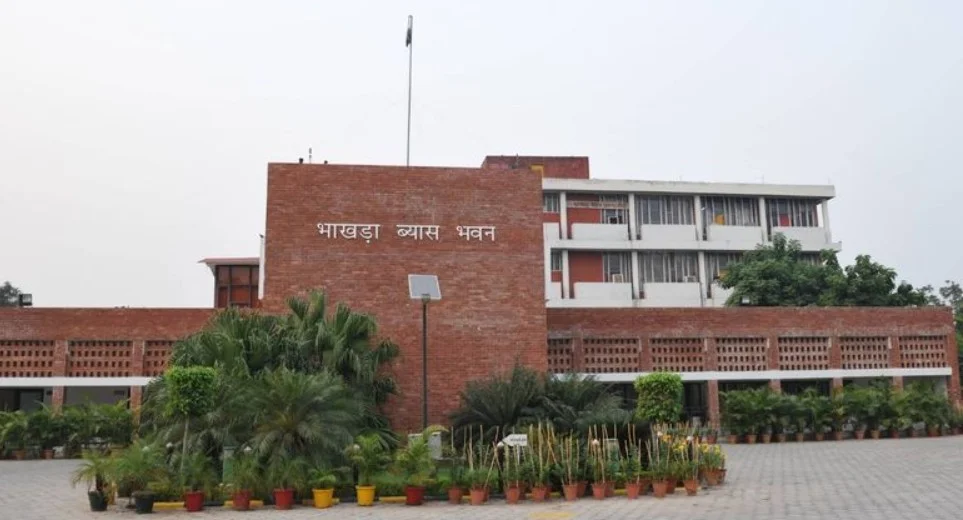
Chandigarh, Feb 11: To safeguard essential supply lines and power infrastructure, the Bhakra Beas Management Board (BBMB) has reached out to the Geological Survey of India for a detailed slope stability analysis. The decision comes after recurring landslides in the lower Himalayan region hampered movement and sent muck into the dam’s power house facilities during previous rainy seasons.
The hills flanking the 226-meter-tall gravity dam consist largely of sedimentary and metamorphic rocks, which experts mentioned are highly prone to erosion. Although concrete supports were used to stabilize the area decades ago, officials noted that water seepage and vegetation growth might have weakened these historical reinforcements.
“BBMB authorities managed to contain the situation in time, preventing any major operational disruption,” an official mentioned regarding past incidents. However, the Board noted that relying on aging structures is no longer viable given the increasing frequency of extreme rainfall events. The proposed study will provide a roadmap for fresh reinforcement measures to secure the approach routes from Nangal.
The GSI study is expected to focus on identifying vulnerable fault lines and improving drainage systems around the Gobind Sagar reservoir. BBMB noted that maintaining the integrity of these slopes is critical for the irrigation and power needs of Punjab, Haryana, Rajasthan, and Himachal Pradesh. By integrating modern stabilization solutions, the Board aims to ensure that the vital hydroelectric hub remains resilient against the geologically active terrain.
