
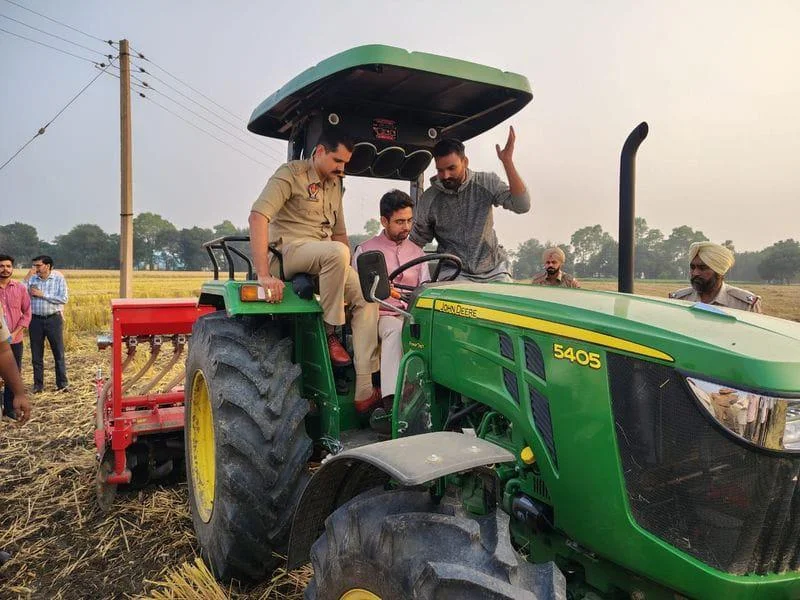
Chandigarh, November 4, 2025: As Punjab continues its battle against stubble burning, Moga district has emerged as a model for change — with top officials stepping into the fields to show that reform begins with participation.
Deputy Commissioner Sagar Setia and SSP Ajay Gandhi were seen driving a tractor and tilling farmland alongside local farmers, demonstrating eco-friendly post-harvest practices. Their message was simple yet symbolic: stubble burning is a habit, not a necessity, and can be replaced through awareness and collaboration.
The initiative comes amid the Mann government’s larger push for sustainable agriculture and cleaner air. The government has provided subsidised machinery and promoted scientific residue management techniques across Punjab. “We are making sure no farmer burns stubble because of lack of equipment,” Setia said. “Our goal is to make stubble a resource, not a waste.”
Officials said that over 320 modern machines were added to Moga’s existing 4,800, and dozens of storage sites have been established to manage residue collection. Police and administration teams are jointly monitoring hotspots, with over 150 nodal officers active across the district.
SSP Gandhi said the drive also aims to reduce accidents caused by low visibility during stubble-burning season. “When air remains clean, roads stay safe, and lives are saved,” he noted.
The initiative has struck an emotional chord with farmers, many of whom said it was the first time senior officers had joined them in such a direct effort. Observers say the Moga example captures the Mann government’s governing philosophy — leading by example and connecting with citizens beyond officialdom.
Chief Minister Bhagwant Mann has often said governance should mean “walking with the people, not ruling from offices.” In Moga’s fields, that idea took physical form — where officials, farmers, and the environment stood together for a greener Punjab.
