
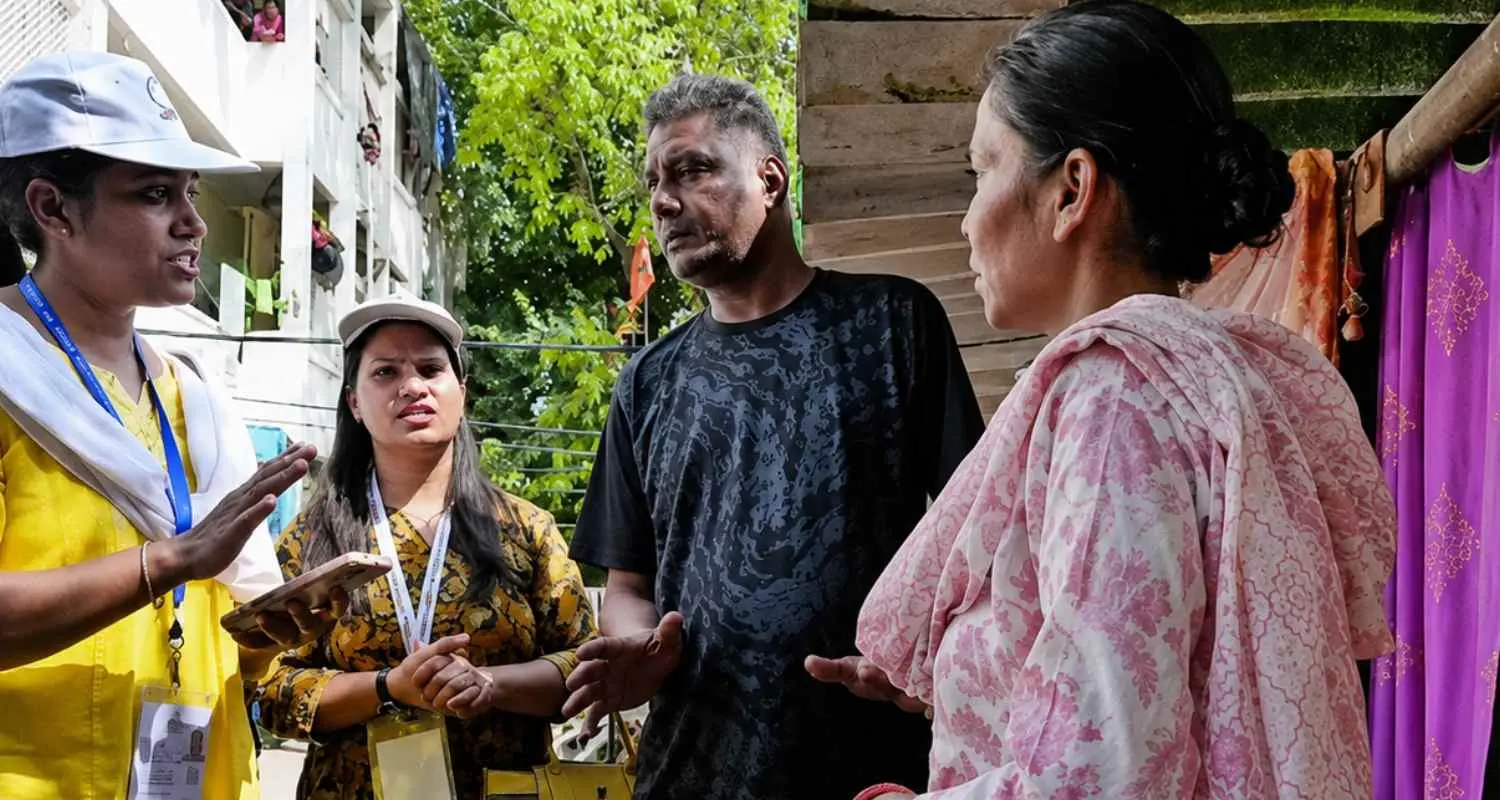
New Delhi, August 14: India is preparing to conduct its first post-independence population count incorporating universal caste enumeration, following the notification of a detailed forty-question survey by the central government. Issued under the Census Act of 1948, the comprehensive questionnaire covers a wide spectrum of citizen data ranging from literacy and employment status to fertility metrics and migration background. The inclusion of universal caste tracking under question number ten marks a major structural shift from earlier decennial counts that solely recorded Scheduled Castes and Scheduled Tribes.
The upcoming survey incorporates several modern features, operating as the country’s inaugural digital census with mobile collection tools and direct self-enumeration options. Survey takers will gather essential demographic details along with information on financial accounts, language capabilities, and official identification documents such as passports, voter cards, and government-issued identity cards.
In exercise of the powers conferred by sub-section (1) of section 8 of the Census Act, 1948, the Central Government hereby instructs and directs that the census officers may, within the limits of the local area for which they have been respectively appointed, ask all such questions of all persons residing within such limits, pertaining to the items enumerated below, for collecting information through the Household Schedule in connection with the Census of India 2027, the official notification declared.
Legal provisions governing the process guarantee strict privacy for all participating households, preventing individual data from being shared or accessed through public requests.
The framework guarantees strict confidentiality of individual data, reinforcing public trust and participation, the Ministry of Home Affairs maintained, noting that statutory protections ensure personal submissions cannot be produced as court evidence or disclosed under transparency laws.
Execution of the multi-year project will proceed in two major steps, backed by a Union Cabinet financial allocation of over eleven thousand seven hundred crore rupees. The first phase, dedicated to house listing and assets, will take place across states and Union Territories during a thirty-day window in 2026. The second phase, containing the primary population enumeration and full caste survey, will follow in early 2027, completing a unified national picture of demographic and socio-economic trends.
