
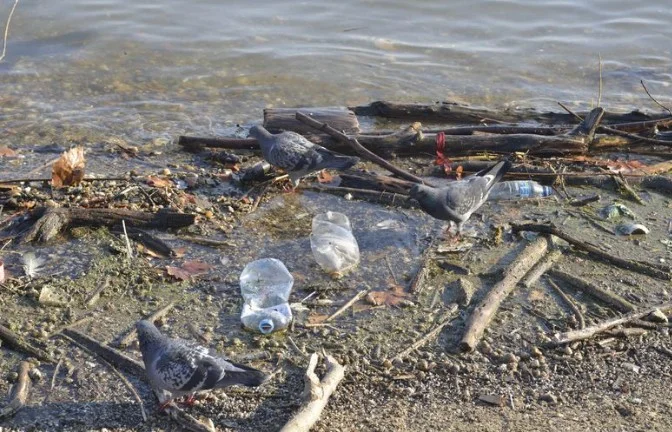
Chandigarh, Aug 13: Punjab’s bird populations are facing an unprecedented threat from micro-plastic pollution, with scientists warning that the state’s wetlands, rivers, canals, lakes and village ponds are becoming silent as the once-familiar calls of native species fade. Researchers say the contamination, invisible to the naked eye yet far more dangerous than larger plastic waste, is poisoning water bodies and entering the food chain through fish and insects, eventually harming birds and humans alike.
Micro-plastics — fragments smaller than 5 mm — carry toxic chemicals such as PCBs and DDT, which disrupt hormones, weaken immunity and impair growth and reproduction. Field studies from Punjab Agricultural University in Ludhiana show that carnivorous and insectivorous birds dependent on clean wetlands are particularly vulnerable, with many found ingesting plastic debris or feeding it to their chicks. Principal Ornithologist Dr Tejdeep Kaur Kler said the decline in bird numbers is a warning that “if plastic continues to poison our rivers, ponds and skies, the silence of the birds will soon echo our own ecological failure.”
Across India, similar patterns are emerging. In Tamil Nadu, Uttar Pradesh and Assam, kingfishers, herons and egrets have been found dead with plastic lodged in their stomachs. In Delhi and Mumbai, scavenger birds like black kites are suffering injuries and starvation from landfill waste, while wetlands such as Chilika Lake and the East Kolkata Wetlands have reported declining bird counts linked to plastic-choked waters. In Punjab’s rural areas, once-thriving village ponds have turned into dumping sites, with rainwater washing discarded plastic into low-lying wetlands and suffocating aquatic ecosystems where birds feed and nest.
Plastic pollution affects birds in multiple ways: ingestion can block digestion or puncture internal organs, discarded fishing lines and kite strings can trap and deform birds, and plastic fibres in nests expose chicks to heat stress and toxins. A 2022 Indian Institute of Science study even detected micro-plastics in urban crow feces, underscoring the extent of contamination through food waste and water.
Punjab, home to an extensive network of water bodies, has imposed a ban on single-use plastic carry bags since April 2016, later expanding it in July 2022 to include items like straws, cutlery, trays, wrappers and bottles. Yet enforcement remains inconsistent, with illegal dumping still common near wetlands and riverbanks. Informal waste collection workers, vital to recycling efforts, often lack training, equipment and institutional support.
Experts stress that while the crisis is human-made, it is also reversible. Biodegradable packaging innovations, community-led clean-up drives, and plastic-free buffer zones around wetlands are showing promise. In Punjab, students and NGOs have restored some wetland areas such as Sultanpur, while nationwide campaigns like UNEP’s #BeatPlasticPollution are raising awareness. Dr Sandeep Jain of People for Animals said, “Birds are among the first to suffer, but the ripple effects touch every species, including humans. When birds vanish, ecosystems unravel.”
Conservationists warn that the loss of birds is not merely an ecological tragedy but a sign of deeper environmental collapse. Birds pollinate plants, disperse seeds, regulate pests and clean up waste — roles that keep ecosystems functioning. Their disappearance threatens to upset entire food webs, with consequences reaching far beyond Punjab’s borders. The call to act, they say, is urgent: without immediate intervention, the fading birdsong may soon be replaced by an irreversible silence.
