
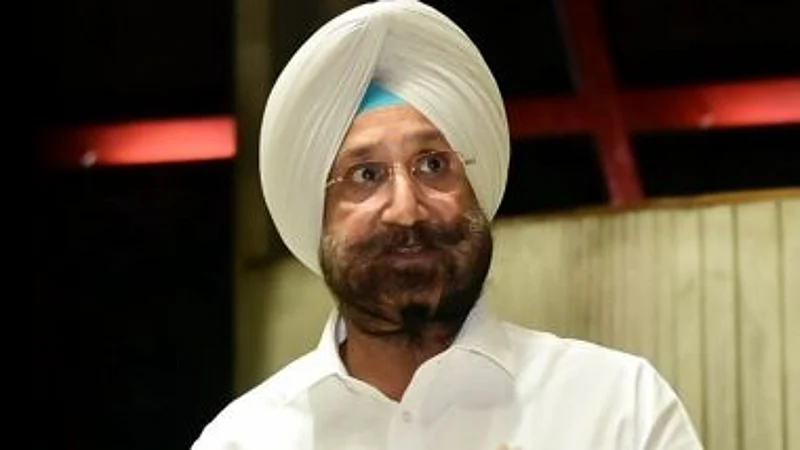
Chandigarh, March 26: Sukhjinder Singh Randhawa, MP and former Deputy Chief Minister, has slammed the state government following reports that the Indian Army rejected a supply of Verka milk powder.
In a statement issued from his office on March 26, Randhawa demanded a high-level probe to determine why the leading Punjab-based dairy brand failed to meet the required quality benchmarks.
The MP asserted that the incident has cast a shadow over the state’s claims of good governance.
He maintained that the government is fully responsible for the questions now being raised about the brand’s integrity. Randhawa declared that it is a heinous crime if products deemed unfit for the military are being supplied to the general public for consumption.
He noted that the state must provide clear assurances regarding the safety of all dairy products currently in the market to prevent public panic.
“Trust earned by institutions like Verka over decades should not be allowed to weaken due to administrative lapses,” he said.
He affirmed that a thorough investigation is necessary to identify if any officials were negligent in their duties.
He also asserted that the government must confirm whether proper standards are being followed for all milk products used by the people of Punjab, as public confidence in the dairy sector remains a priority.
The Indian Army has declined a full shipment of whole milk powder provided by Milkfed, the dairy cooperative of the Punjab Government.
A communication from the Officer Commanding of an Army Service Corps unit in Jammu informed the Ludhiana District Cooperative Milk Producers Union that approximately 125 metric tonnes of the product were being turned back.
However, sources within the state cooperative maintained that the rejection involved two specific batches—comprising 58.338 MT and 66.654 MT—after samples failed to meet the military’s established quality standards.
