
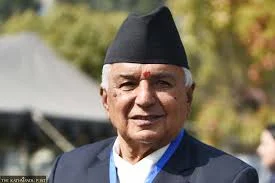
KATHMANDU, September 11 — Nepal’s political crisis deepened Thursday as efforts to form an interim government remained stuck, even as President Ramchandra Paudel urged calm and vowed to resolve the deadlock within the bounds of the Constitution.
“I am making every effort to protect democracy and to find a way out from the present political impasse within the constitutional framework while at the same time maintaining law and order,” Paudel said in his first remarks since Prime Minister K.P. Sharma Oli’s ouster earlier this week. Under military protection and absent from public view after his residence and office were set ablaze by demonstrators on Tuesday, Paudel appealed for restraint. “A solution is being sought as soon as possible to address the demands of the agitating citizens,” he said.
Despite his assurances, negotiations over who will head the transitional government faltered. Leaders of the youth-led “Gen Z” movement, which has spearheaded the protests, held talks with Nepal’s top military officials but could not agree on a consensus candidate. Former Chief Justice Sushila Karki, Kathmandu Mayor Balendra Shah, former Nepal Electricity Authority CEO Kulman Ghising, and Dharan Mayor Harka Sampang were among those floated by Gen Z activists, though support remained divided.
An Army spokesperson confirmed discussions with “different stakeholders” were ongoing but declined to provide details. “The talks are mainly focused on finding a way out from the current stalemate and at the same time maintaining law and order,” he said.
The unrest that erupted Monday has left at least 34 dead, according to the Ministry of Health. Another 1,338 people remain hospitalized, while 949 have been discharged. The toll rose further Thursday after three prisoners were killed and 13 injured during clashes with security forces at Ramechhap district prison. With those deaths, the number of inmates killed since Tuesday climbed to eight.
The protests triggered mass jailbreaks, with more than 15,000 prisoners fleeing over 25 facilities nationwide, police sources told The Kathmandu Post. In response, the Army has reimposed prohibitory orders in Kathmandu Valley’s three districts, restricting movement except for brief windows. Curfew hours run nightly from 7 p.m. to 6 a.m.
Even under restrictions, residents were seen rushing to markets to stock up on essentials. Streets in the capital remained largely deserted, still marked by scorch damage from earlier arson and vandalism.
Meanwhile, Gen Z leaders doubled down on their political demands. At a press briefing in Kathmandu, they called for Parliament’s dissolution and constitutional amendments to “reflect the will of the people.” One activist warned established parties not to exploit the movement: “This is purely a civilian movement, so don’t try to play politics with this.”
Activist Diwakar Dangal framed the struggle as existential. “There is a challenge in front of us to protect national sovereignty, unity, and maintain self-respect,” he said. Others emphasized they did not want to join a new government but preferred to remain a “watchdog” over its functioning.
While some activists leaned toward supporting Karki as interim leader, others pushed Ghising. The lack of consensus has delayed any breakthrough. Still, a small group of students aligned with mainstream parties staged counter-demonstrations urging preservation of the Constitution, democracy, and human rights.
The turmoil has rippled into Nepal’s institutions. The central bank ordered commercial lenders to reopen from 10 a.m. to 2 p.m. after days of closure. The Department of Immigration issued notice allowing foreigners with visas expired after September 8 to leave without penalty, and to regularize documents lost during the unrest.
Security operations remain widespread. The Army said it disposed of eight crude bombs in Banepa Municipality, about 60 kilometers east of Kathmandu. Forces also recaptured 166 escaped inmates and seized 97 weapons allegedly stolen from security personnel during the riots.
Despite heightened security, Paudel’s appeal underscored the urgency of dialogue. “I appeal to all parties to cooperate in maintaining peace and order in the country with restraint,” he said, stressing that stability can only be restored through political consensus.
