
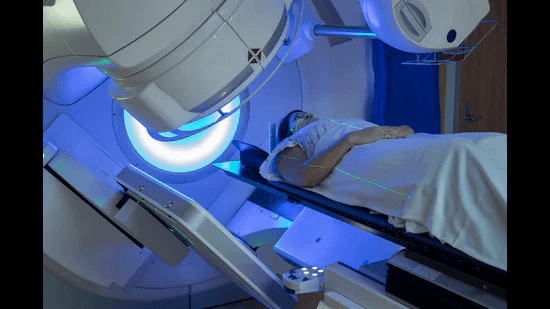
Chandigarh, Sept 8 — A landmark study by the Post Graduate Institute of Medical Education and Research (PGIMER) has found that breast cancer patients can safely complete radiotherapy in just one week instead of the usual two, cutting hospital visits and easing treatment burdens without compromising results.
The five-year clinical trial, titled “Hypofractionated Adjuvant Radiotherapy in 1 versus 2 weeks in High-Risk Patients with Breast Cancer (HYPART): Acute Toxicity Results,” assessed 941 patients between the ages of 21 and 75 with stage 2 and 3 breast cancer.
Traditionally, most Indian hospitals, including AIIMS Delhi, have followed a three-week radiotherapy protocol. PGIMER has offered a shorter two-week course since 2015 with similar success. The new trial tested whether treatment could be further compressed into five sittings spread across one week. Patients in the shorter schedule received slightly longer doses in each sitting compared with the 10-session, two-week regimen.
The results showed that the one-week approach was equally effective and, in some cases, better tolerated. Fewer patients reported difficulty in swallowing, while side effects such as neck pain, skin reactions and arm swelling were similar in both groups.
Dr. Budhi Singh Yadav, professor in PGIMER’s radiotherapy and oncology department, said the findings carry major implications for patients and hospitals alike. “One-week radiotherapy showing equal results as those of two weeks would mean fewer hospital visits and faster treatment, especially for those travelling long distances. It also helps reduce waiting times,” he said.
Between 2021 and 2024, PGIMER treated 3,175 breast cancer patients, with about half requiring radiotherapy. Dr. Yadav noted that while international studies a decade ago proved radiotherapy could be safely completed in three weeks, shorter regimens were usually tested only in low-risk, early-stage patients. “The HYPART trial, by contrast, included high-risk patients, making it one of only three studies worldwide to test a one-week schedule in this group,” he said.
The trial used a simple technique suitable for hospitals in developing countries that lack high-end radiation machines. While the study focused on short-term side effects, researchers cautioned that long-term outcomes from the one-week schedule still need to be evaluated.
Published on August 6 in Elsevier, the study was conducted by PGIMER’s departments of radiotherapy, oncology and general surgery in collaboration with Dr. RP Government Medical College, Tanda (Himachal Pradesh), Tata Memorial Centre (Mumbai), JIPMER (Puducherry) and Rohilkhand Medical College and Hospital (Bareilly, Uttar Pradesh).
