
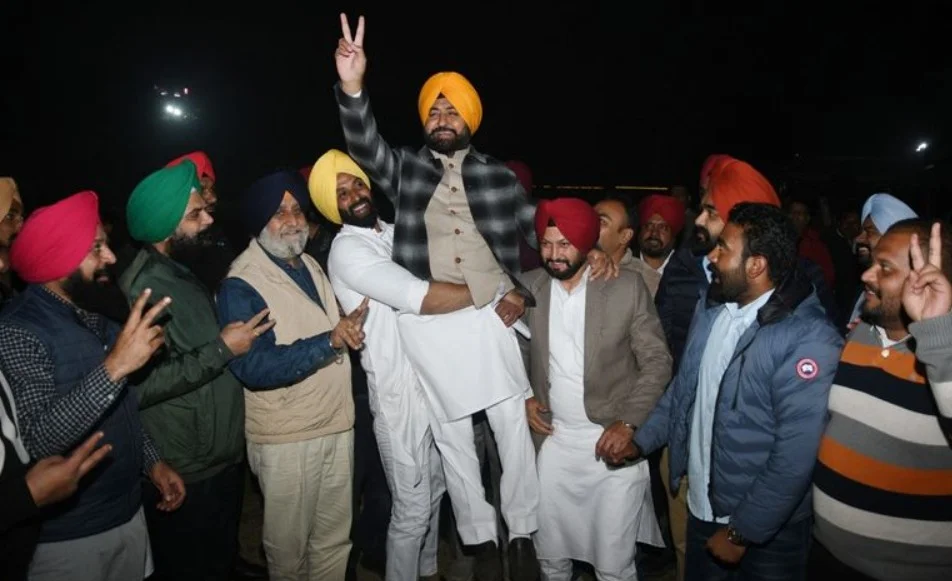
CHANDIGARH, Dec. 22, 2025 — The Aam Aadmi Party’s strong performance in Punjab’s Gram Panchayat elections is being viewed by political observers as a measure of Chief Minister Bhagwant Mann’s pro-public governance and the government’s expanding influence in rural areas.
Candidates supported by the ruling party won 261 of the 580 sarpanch seats, or about 45%, according to State Election Commission data. In 319 villages, AAP-backed candidates secured victories by margins exceeding 100 votes, indicating decisive local mandates.
Mann said the outcome reflected public confidence in transparent administration and service delivery at the grassroots level.
“When governance is honest and elections are fair, people respond with clarity,” Mann said. “These results suggest that government work is reaching villages.”
The elections, conducted by the State Election Commission, were held peacefully with voter turnout crossing 70% in many areas, officials said. The administration and police reported no major law-and-order incidents during polling.
Analysts say the results suggest that the Mann government’s focus on welfare and basic services has translated into political support in rural Punjab, an area traditionally dominated by regional parties.
Over the past three years, the government has expanded free electricity supply of up to 300 units per month, strengthened primary health care through Mohalla Clinics, and increased spending on government schools, roads and water supply. Officials say funding for Panchayati Raj institutions has also been raised to give village bodies greater control over development work.
“These elections are less about party labels and more about local performance,” said a Chandigarh-based political analyst. “The margins of victory indicate voter satisfaction with governance outcomes rather than campaign rhetoric.”
The Congress and Shiromani Akali Dal recorded weaker performances in several districts, though party leaders have attributed the results to local factors rather than broader political trends.
Political observers said the panchayat results do not directly predict assembly outcomes but provide insight into rural sentiment ahead of the 2027 state elections.
For the Mann government, the village-level verdict is being interpreted as an early indicator that its governance model is gaining acceptance beyond urban centers, with rural voters increasingly responding to service delivery and institutional transparency.
