
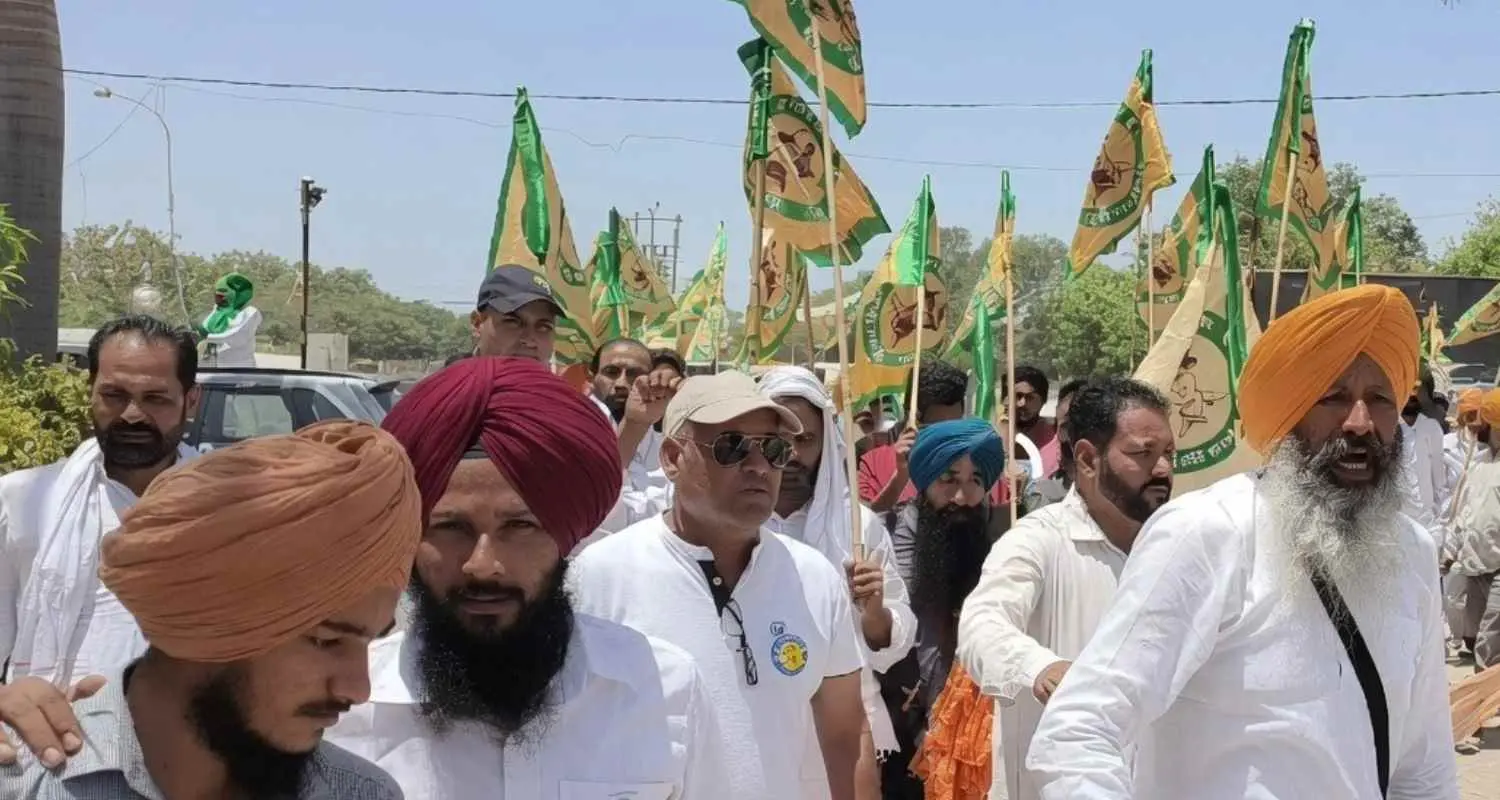
CHANDIGARH, July 17— State agricultural sectors have initiated widespread public mobilizations timed to coincide with the Prime Minister’s multi-crore infrastructural inaugurations in Chandigarh and Jalandhar. The Kisan Mazdoor Morcha declared that the decisions to launch these localized protests were finalized during an emergency structural meeting held in Ludhiana. The collective maintains that the federal government’s trade strategies and modernization initiatives directly undermine the livelihood security of the state’s massive agrarian workforce.
Union spokespersons stated that the core focus of the protest rests on securing a permanent statutory backing for crop pricing alongside complete institutional debt relief. Organizers asserted that global trade agreements are being advanced without adequate protective safeguards for small-scale domestic producers.
“Our protest is against the US-India trade pact, which affects farmers and other labour-dependent sections,” declared union leader Sarwan Singh Pandher during an address outlining the movement’s objectives. “We also want to raise the issue of a legal guarantee for MSP on all crops, as was promised to us, besides a farm debt waiver.”
The union’s platform has concurrently raised human rights concerns, pressing for a transparent, state-level judicial inquiry into the complex events of the late twentieth century. The body affirmed that a public commission must be formed to accurately document the missing persons cases and fatalities that impacted innocent families from both minority and majority communities during past decades of unrest.
“The decision to hold protests by burning effigies of the BJP government was taken at a meeting of the Morcha in Ludhiana on Thursday,” Pandher asserted, noting that railway changes pose immediate employment risks to thousands of workers.
The farm body maintained that the central executive has consistently failed to provide appropriate recognition or compensation for the estimated 750 protesters who perished during recent boundary agitations. The mobilization underscores a persistent friction between local agrarian bodies and federal development projects, with unions reinforcing that public demonstrations will remain peaceful yet highly visible at every major administrative hub.
