
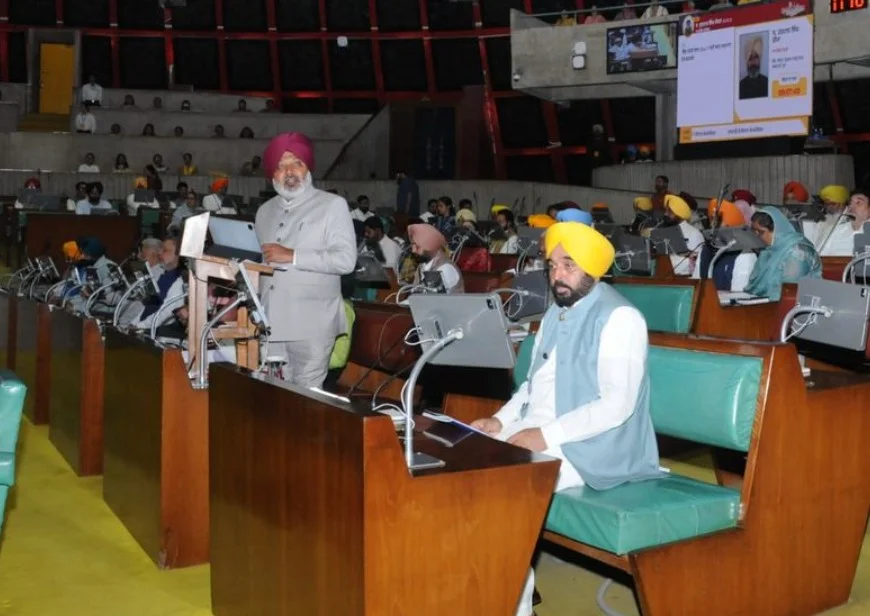
Chandigarh, March 12: A budget of Rs 2,60,437 crore was approved by the Punjab Assembly on Wednesday evening, concluding a discussion that focused more on political positioning than fiscal metrics. Finance Minister Harpal Singh Cheema defended the state’s financial health, asserting that the government is borrowing significantly less than previous administrations while doubling its revenue receipts.
“The budgetary allocation for police has been increased to help improve internal security and dues of all cane growers have been released,” Minister Cheema stated during the proceedings. Renewable Energy Minister Aman Arora further countered opposition criticism regarding public debt, maintaining that recent loans were primarily utilized to service interest on debts inherited from past governments.
Chief Minister Bhagwant Mann used the floor to challenge the viability of his political rivals. He asserted that his opponents have been “writing his epitaphs for many years” but maintained that the AAP remains “battle ready” for the 2027 polls. He specifically critiqued the Congress leadership structure, declaring that “everyone wants to become the CM in their party.”
The Chief Minister also took aim at Akali leadership, referencing historical ties to General Dyer and the Jallianwala Bagh massacre. Without mentioning names, he affirmed that certain leaders who recently exited Nabha jail had promoted drug culture in the state.
Legislative contributions came from the few opposition members present, including Rana Inder Pratap Singh, who suggested an One-Time Settlement (OTS) scheme for Rs 3,000 crore in non-performing assets held by cooperative banks. SAD MLA Manpreet Singh Ayali noted that the newly announced financial aid for women should have been introduced earlier in the government’s term.
The session also saw the introduction of a resolution against the Centre’s foreign policy, which Minister Lal Chand Kataruchak stated has led to an emerging energy crisis. Meanwhile, the government confirmed intentions to evaluate global best practices to safeguard children from social media risks.
