
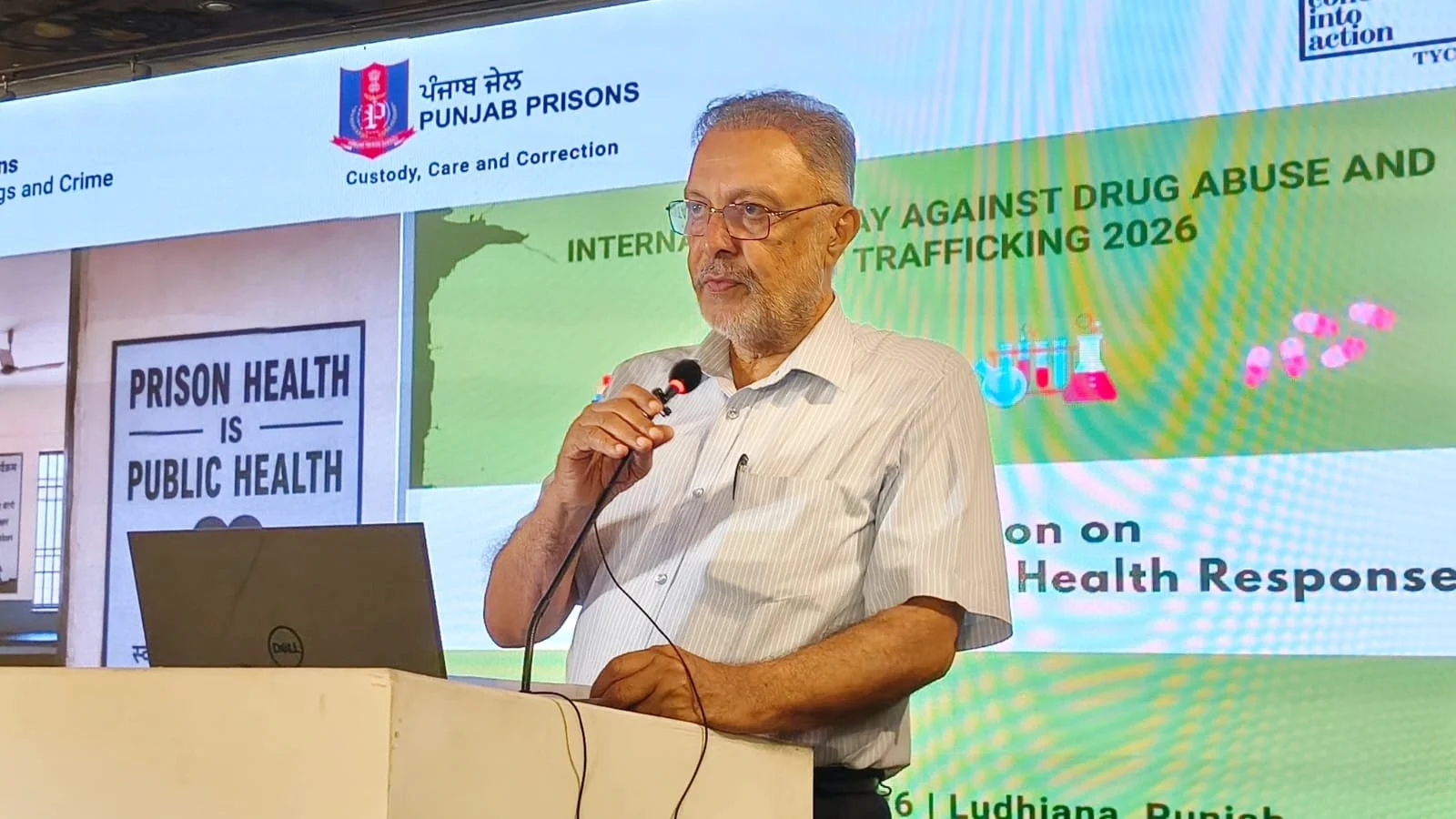
Ludhiana, June 28: Punjab is upgrading its correctional philosophy through an expanded partnership with the United Nations Office on Drugs and Crime to ensure continuous healthcare for inmates during and after their sentences. At a specialized consultation in Ludhiana organized alongside the NGO TYCIA, state authorities resolved to adopt strict rights-based protocols for managing HIV, mental health, and addiction inside prisons. The policy shift focuses heavily on continuity of care, guaranteeing that psychosocial support does not terminate upon an inmate’s release.
The state’s current operational strategy relies on distinguishing medical vulnerability from criminal intent, a move that has redirected thousands of users into recovery pathways. Alongside the distribution of psychiatric support and ITI vocational courses, health teams have conducted massive screening drives for twenty-five thousand inmates to address underlying communicable diseases.
Punjab Jail Minister Dr. Ravjot Singh clarified that the administration’s strict legal stance on trafficking exists alongside a deep commitment to systemic rehabilitation.
“Punjab stands first when it comes to convictions under the Narcotic Drugs and Psychotropic Substances Act,” Dr. Ravjot Singh declared. “Similarly, we must set an example for reformative justice as well.”
The operational framework relies heavily on the existing network of Outpatient Opioid Assisted Treatment clinics operating directly within prison walls. These facilities are being supplemented by new screening mechanisms and withdrawal management protocols developed in tandem with international experts.
Health and Family Welfare Minister Dr. Balbir Singh mapped out the scale of the state’s ongoing diversion and treatment program.
“In the last one year and three months, over 10,000 addicts who would otherwise have been in jail have instead been admitted to de-addiction centres,” Dr. Balbir Singh announced. “Apart from that, ITI courses for skill development, along with psychiatrists and counsellors, are available for inmates.”
The consultation featured specialized presentations by IG Prisons Mohammad Tayyab and detailed thematic panels dealing with overlooked challenges in detention, such as the specific reproductive and mental health needs of female inmates. Stakeholders reviewed global best practices regarding substance use disorders, concluding that access to medical treatment remains a fundamental right for every citizen, regardless of legal status.
Ms. Seema Joshi, Criminal Justice Expert with the UNODC Regional Office for South Asia, pointed out that innovative partnerships are vital to addressing the modern complexities of rehabilitation.
“Strengthening prison health, drug treatment and HIV services is a critical part of that response, helping individuals recover and reintegrate while building safer and healthier communities,” Ms. Seema Joshi affirmed.
