
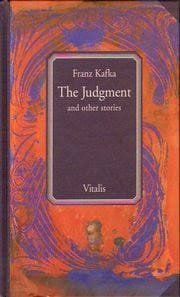
Chandigarh, Dec 8: The Judgement is one of the most unsettling and deceptively simple stories in modern literature — a compact explosion of guilt, authority, and the impossible weight of a father’s voice. Written in a single night in 1912, it carries the feverish clarity of a dream that feels more real than waking life.
At its heart, the story follows Georg Bendemann, a young merchant who writes a letter to a distant friend and then seeks approval from his father. What begins as an ordinary conversation shifts with the force of a psychological earthquake. The father — frail a moment earlier — suddenly rises into terrifying authority, accusing Georg of betrayal, weakness, and falsehood. Within a few pages the relationship inverts: the father’s judgment becomes absolute, mystical, and fatal.
Kafka’s prose is tight but electric. Every sentence feels like it is walking the edge between the everyday and the surreal. The father’s condemnation — the famous line sentencing Georg to death by drowning — lands with the violence of a curse spoken by an ancient deity rather than a weak, aging parent. In that moment, the story exposes the deepest Kafka theme: the impossible power structures inside families, nations, and the human mind itself.
What makes The Judgement extraordinary is that it operates on multiple levels at once. It is a father–son drama, a symbolic confession, a portrayal of inner guilt, and a mythic trial with no rational cause. The ending — Georg’s obedient leap from the bridge — still shocks, not because of its brutality, but because Kafka makes it feel inevitable, as if Georg has been living under this sentence long before it was spoken.
Reading it today, The Judgement remains a masterpiece of psychological tension. It shows how authority can become monstrous, how intimacy can transform into accusation, and how a single command can shatter a human being’s entire sense of self. It is dark, compressed, and unforgettable — one of the purest distillations of the world Kafka would continue to build throughout his life.
