
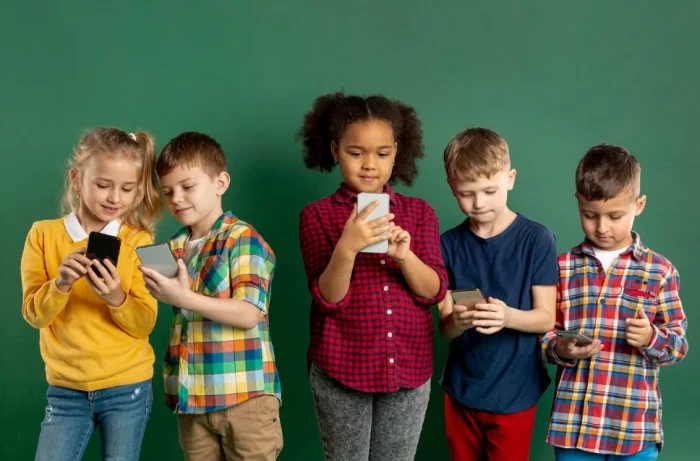
CHANDIGARH, June 22– As the school bell rings and backpacks are slung over shoulders, a quieter battle begins in the pockets and palms of children: the endless scroll through unfiltered, algorithm-driven content on social media. In Chandigarh and across the country, pediatricians, psychologists, and educators are raising red flags over the alarming psychological and emotional impact this is having on children and adolescents.
With children as young as 10 now routinely accessing platforms like Instagram, YouTube Shorts, Snapchat, and TikTok (via VPNs or clones), experts warn that the exposure to age-inappropriate content—ranging from violence and hate speech to unrealistic beauty standards and misinformation—is causing deep, sometimes invisible harm.
“Social media is shaping the self-image of children before they’ve even formed a basic understanding of who they are,” said Dr. Neha Dutt, a child psychologist at the Postgraduate Institute of Medical Education and Research (PGIMER), Chandigarh. “We’re seeing a sharp increase in anxiety disorders, attention deficits, cyberbullying trauma, and identity confusion among school-aged kids.”
According to her, many children are absorbing content intended for adults—whether it’s fitness influencers promoting body transformations, emotionally manipulative relationship “advice,” or reels glamorizing risky behavior. “They’re not mentally equipped to filter, question, or process these messages. What they see, they believe,” she added.
Dr. Dutt’s recent case involved a 13-year-old boy who had stopped eating properly and became socially withdrawn after following multiple fitness influencers who glorified extreme dieting. “He told me he felt ‘ugly’ and ‘weak’ compared to boys his age online. This is someone who had no body issues until social media told him he should.”
Parents, too, are beginning to voice concern, often too late.
“We thought giving our daughter a phone was a reward for good behavior,” said Gurpreet Kaur, a mother of two from Mohali. “Within months, her behavior changed. She became irritable, secretive, and constantly compared herself to influencers. I didn’t realize the damage until her grades fell and she broke down one night saying she hated how she looked.”
Teachers in Chandigarh are reporting an uptick in restlessness and declining attention spans in classrooms.
“Students today struggle to focus for more than 10–15 minutes at a stretch,” said Rajiv Sharma, principal of a prominent private school in Sector 35. “They’re so used to 30-second reels that reading a textbook seems boring. The dopamine loop created by short-form content is rewiring their brains.”
Even more worrying is the normalisation of cyberbullying and online abuse. Dr. Isha Bedi, a pediatrician working with schools under Chandigarh’s UT Education Department, said they have begun conducting regular awareness sessions to educate children about digital hygiene.
“We’ve had 11- and 12-year-olds crying in our sessions because they were targeted in group chats or anonymously on apps like Whisper and Sarahah,” Dr. Bedi said. “It’s not just the visible scars—it’s the damage to self-esteem that can last for years.”
Unlike television or even books, social media operates without boundaries, offering little to no buffer between dangerous content and young minds. Algorithms, designed to increase screen time, often funnel users into more extreme or sensational content based on their viewing history.
A 2023 study by the Indian Journal of Psychiatry reported that children who spend more than three hours daily on social media are at double the risk of developing mental health issues such as depression and sleep disorders.
Despite the growing body of evidence, regulation remains weak. Most social media platforms require users to be 13 or older, but enforcement is lax, and age-verification systems are easy to bypass.
“Parents are often unaware of the apps their children are using. There’s a false sense of security because the phone is in their own house. But the internet has no walls,” said cybersecurity expert Rahul Chopra, who has worked with schools across Punjab and Haryana. “Monitoring tools help, but digital literacy at home is essential.”
Experts are calling for urgent multi-pronged action. Schools, they say, must go beyond academics and incorporate digital wellness into the curriculum. Parents need to be more proactive, setting boundaries and discussing online content with their children regularly.
Dr. Neha Dutt adds, “You can’t just snatch the phone and hope for the best. You have to talk to your child about what they’re watching, what they think it means, and how it makes them feel. If you don’t have these conversations, the algorithm will have them first.”
Meanwhile, voices are growing louder in Chandigarh for government-led intervention—whether through stronger age-verification, content moderation, or digital education programs tailored for children and parents alike.
As digital footprints deepen, the question is no longer whether children will use social media—but whether society will act in time to ensure they survive it emotionally intact.
