
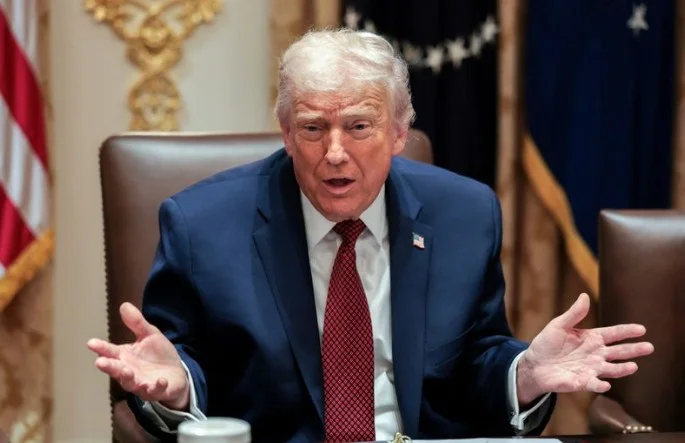
New Delhi, Dec 9: Farmers urged Donald Trump on Monday to act against rising rice imports from India and Thailand, prompting the president to signal fresh tariffs during a farm-sector roundtable at the White House.
Louisiana rice miller Meryl Kennedy told Trump that southern growers are facing acute pressure. “Other nations are dumping rice into the US,” she said, naming India first. She added that Puerto Rico—once a major buyer of US rice—is now importing from China instead: “We haven’t shipped rice into Puerto Rico in years.”
Trump pressed Treasury Secretary Scott Bessent for clarity on India’s trade position. “Why is India allowed to do that?” he asked. Bessent replied that negotiations on a trade deal were still underway.
“They shouldn’t be dumping,” Trump said. “It’s solved so quickly with tariffs.” He asked Kennedy to list all the countries involved and told Bessent to record them. “Tariffs again. It solves the problem in two minutes,” he said.
Kennedy said a WTO dispute case against India was already active and reiterated the farmers’ stance: “We need fair trade, not free trade.” She also told the president that certain foreign companies “bought the largest brands at retail,” giving them more leverage to subsidise cheaper products. When Trump asked who did so, she said, “Indians.”
“We’ll take care of it,” he replied. “It’s so easy.”
Trump complained that lax policies under previous administrations had hollowed out sectors such as automobiles and semiconductors. “It’s the same thing with rice,” he said. Lower courts have ruled his use of emergency tariff powers illegal; a final ruling now rests with the Supreme Court.
India remains the world’s top rice exporter with a 30.3% share, according to the Indian Rice Exporters Federation. Though the US imported 2.34 lakh tonnes from India last year—primarily premium varieties like Sona Masoori—exports to West Asia dominate India’s trade portfolio.
Earlier this year, federation president Prem Garg described US tariffs as a “temporary hurdle,” saying India still retained a pricing advantage over competitors such as Vietnam and Pakistan.
