
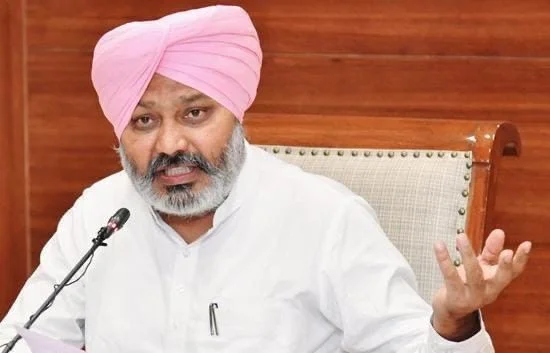
Chandigarh, Feb 12: Punjab Finance Minister Harpal Singh Cheema has termed the recently announced US-India trade agreement a calculated conspiracy by the BJP-led Central Government to dismantle India’s agricultural sector. Speaking at a press conference in Chandigarh on Thursday, the senior Aam Aadmi Party (AAP) leader alleged that the deal is designed to benefit American corporations at the direct expense of Punjab’s farmers.
The Minister warned that the agreement would allow the Indian market to be flooded with cheap American agricultural imports, including milk powder, cheese, and grains. He noted that such a move would crush the domestic farming community, which has provided national food security for over five decades.
“The BJP-led Central Government has prepared a big scheme and conspiracy to destroy Punjab’s farmers and sell India’s agriculture to the USA through this so-called US-India deal,” Cheema said. He questioned where the country’s “Annadata” would turn if their livelihoods were surrendered to foreign interests.
Cheema cited a recent social media post by US Agriculture Secretary Brooke Rollins as evidence of the deal’s true intent. He noted that the US official openly celebrated the pact for its potential to pump cash into rural America and lift US farm prices. According to the Minister, this confirms that the BJP is prioritizing American rural economies over Indian ones.
The Finance Minister also issued an open challenge to Punjab BJP leaders, including State President Sunil Jakhar, MP Ravneet Bittu, and Ashwini Sharma, to disclose the full text of the agreement. He noted that while the BJP claims Punjab will benefit, they have refused to make the deal’s documents public or respond to the specific claims made by US officials.
“Make the documents public. Show the documents through which you are trying to destroy the country,” Cheema directly said. He noted that while tariffs on Indian goods remain at 18 percent, the Indian government has reportedly reduced duties on several US products to zero, creating a structural disadvantage for local producers.
