
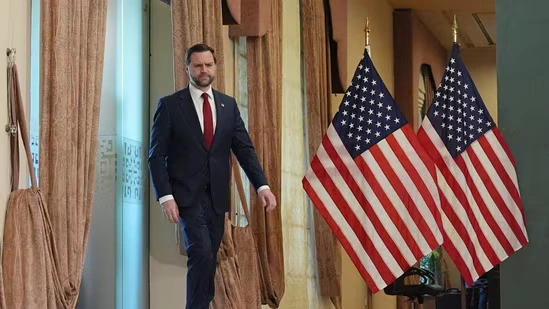
Washington, April 12: Peace talks between Washington and Tehran concluded in Islamabad on Sunday without a formal agreement, leaving the future of regional stability uncertain. Vice President JD Vance, who led the American delegation, stated that the two sides were unable to bridge gaps concerning Iran’s nuclear ambitions and existing sanctions.
Vance asserted that the U.S. team acted in good faith but was firm on national security requirements set by the Trump administration. He affirmed that he was in nearly constant contact with the President and top cabinet officials, including Admiral Brad Cooper of Central Command, to coordinate their strategy. “We were constantly in communication with the team because we were negotiating in good faith,” Vance stated. He maintained that the U.S. is departing with a clear framework that serves as a final offer to the Iranian leadership.
The Iranian delegation, headed by Speaker Mohammed Bagher Ghalibaf, blamed the United States for the stalemate. Ghalibaf stated that trust remains a major issue following decades of conflict and recent military tensions. He asserted that Iran had put forth constructive initiatives that the U.S. side was unable to reciprocate. Officials from the Iranian embassy further declared that the talks are over for now and noted that the strategic Strait of Hormuz remains closed to certain traffic.
U.S. officials maintained that the core objective remains an “affirmative commitment” from Iran to halt its nuclear development. Vance declared that the administration needs to see an end to the tools that would enable a quick achievement of a nuclear weapon. While both sides have expressed a desire for peace, the collapse of these high-level discussions—the first of their kind since the 1979 revolution—suggests that significant diplomatic hurdles remain before a lasting ceasefire can be established.
