
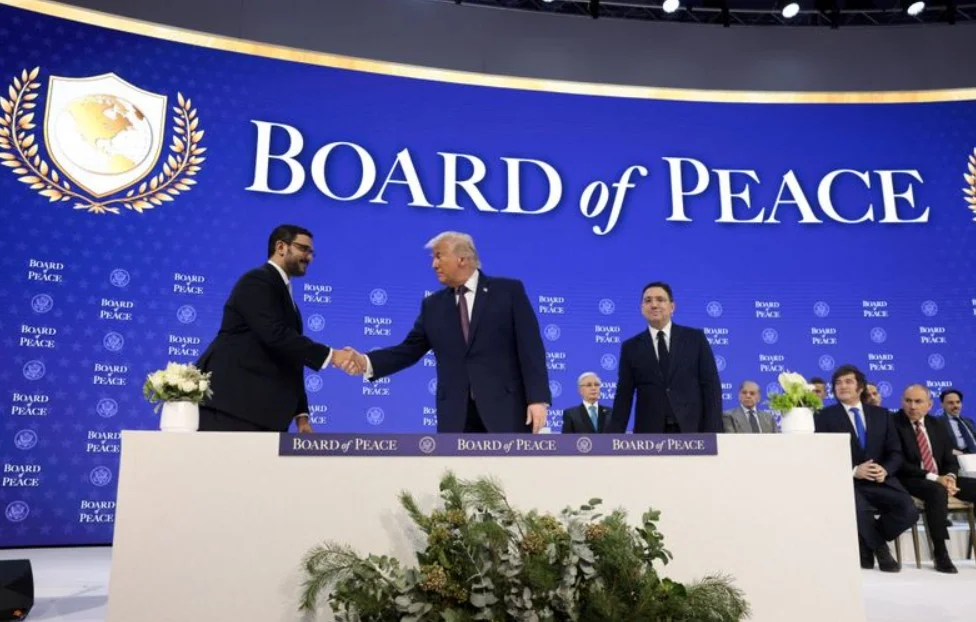
Davos, Jan 22: India was among the prominent nations that did not participate in the signing ceremony for United States President Donald Trump’s “Board of Peace” in Davos on Thursday. While the initiative seeks to establish a framework for lasting peace in Gaza and address global conflicts, New Delhi has opted to carefully study the proposal before making a formal commitment.
Prime Minister Narendra Modi received a personal invitation from President Trump to join the board, which was unveiled during the second phase of a ceasefire agreement between Israel and Hamas. Despite the invitation, Indian officials noted that the government is currently evaluating the sensitive strategic implications of the new international body.
“New Delhi is considering various aspects as the initiative involves sensitive issues,” a person familiar with the matter mentioned, adding that the country’s long-standing support for a two-state solution remains a primary factor in the decision-making process. India has consistently advocated for Israel and Palestine to live side by side in peace and security within recognized borders.
The board will provide strategic oversight and mobilize international resources to ensure accountability as the region transitions toward development. President Trump directly said the organization seeks to “promote stability, restore dependable and lawful governance, and secure enduring peace” in areas threatened by conflict.
To operationalize this vision, the White House recently announced a founding executive board. This committee includes prominent figures such as US Secretary of State Marco Rubio, former British Prime Minister Tony Blair, and World Bank President Ajay Banga. Jared Kushner and US special envoy Steve Witkoff are also part of the group tasked with overseeing the administrative transition.
Despite the high-profile launch, major European and Asian powers, including the United Kingdom, Germany, and China, did not participate in the signing event. India was also among the notable absentees as it continues to review the strategic implications of the new body.
The executive committee is slated to manage a secondary administrative group known as the National Committee for the Administration of Gaza. This structure is intended to fulfill a 20-point plan to ensure Gaza does not pose a threat to its neighbors and is rebuilt for the benefit of its residents.
The initiative has sparked discussion regarding its impact on existing global frameworks. The charter of the board noted that success in conflict zones requires moving away from traditional institutions that have struggled to deliver results in the past.
