
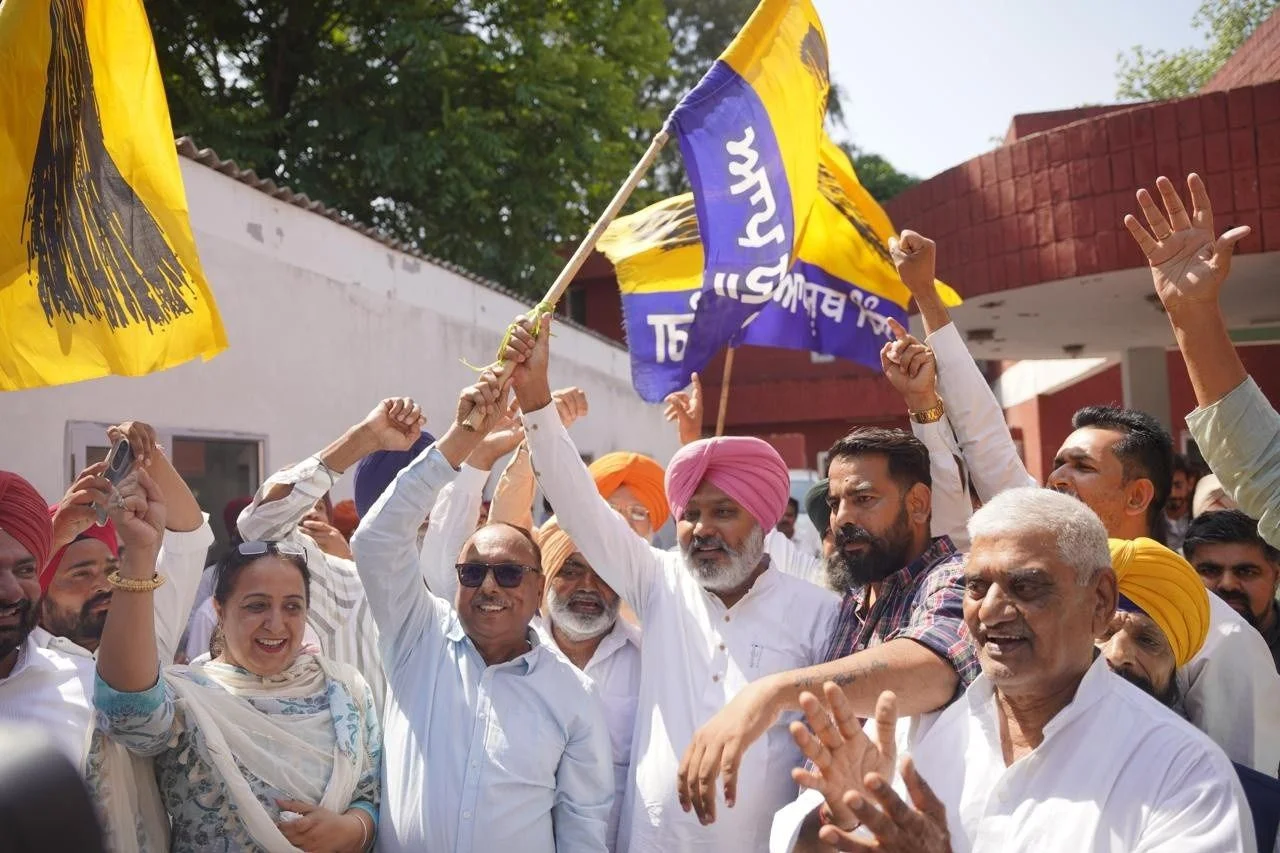
CHANDIGARH, MAY 30 — A decisive triumph in the municipal corporation and council elections across Punjab has triggered statewide victory gatherings for the Aam Aadmi Party, with leadership declaring the outcomes an absolute validation of the state’s public welfare and development projects.
Festive assemblies took place at the party’s Punjab headquarters on Friday as election trends consistently favored administration candidates. Senior officials, including AAP Punjab Prabhari Manish Sisodia, Finance Minister Harpal Singh Cheema, MLA Kuldeep Singh Dhaliwal, and Media In-charge Baltej Pannu, joined grass-roots workers to review the geographic scope of the local mandate. Regional representatives stated that the arrival of ruling party majorities within urban councils will directly accelerate infrastructure initiatives across the state’s commercial zones.
“The people of Punjab have given a very strong message today,” Sisodia stated while addressing the gathered supporters. “They have showered immense respect, blessings and support on Arvind Kejriwal and CM Bhagwant Singh Mann.”
The senior leader tracked a continuous trend in voter sentiment, drawing comparisons to earlier local contests. Sisodia noted that the urban electoral patterns mirrored the lopsided margins previously observed during rural district panchayat elections, signifying unified regional satisfaction with core public initiatives.
“The revolutionary steps taken by the Bhagwant Mann Government in the fields of electricity, water, employment, education and healthcare have now received the people’s stamp of approval,” Sisodia affirmed.
The party executive focused heavily on the broader political implications of the civic margins, noting that the electorate consciously rejected adversarial tactics from central opposition groups. Party documentation indicated that the administrative pushback from voters led to 1,142 opposition nominees losing their electoral deposits.
Looking forward to the upcoming 2027 legislative assembly contests, party organizers maintained that the newly elected mayors and municipal councilors will establish a highly organized network to sustain current policy goals. Sisodia concluded that the incoming local representatives are positioned to solidify governance strategies at the street level, ensuring that structural developments continue uniformly across all municipal borders.
