
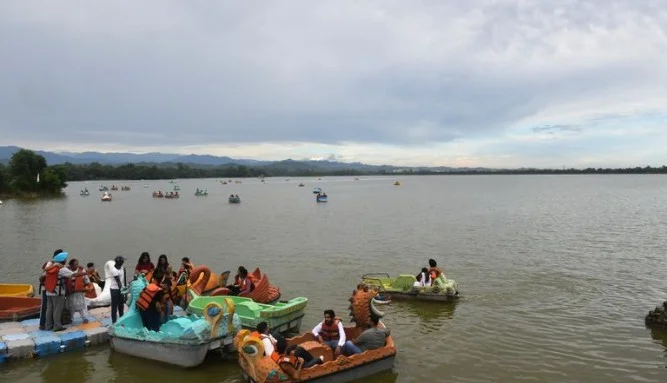
Chandigarh, July 3: Sukhna Lake is undergoing a major scientific desiltation drive at its regulatory end to expand its total water retention capacity by 54,000 cubic metres. The ongoing restoration work follows guidelines drafted by the Indian Institute of Technology Roorkee and WWF-India to ensure long-term environmental sustainability. The details came to light during a meeting of the Wetland Authority of Chandigarh, where officials mapped out upcoming ecological and infrastructure measures for the national priority wetland.
“We need an integrated and coordinated approach among departments to ensure long-term ecological sustainability and biodiversity conservation,” Punjab Governor and UT Administrator Gulab Chand Kataria declared. While presiding over the meeting at Lok Bhawan, the administrator requested regular updates on migratory bird patterns and asked teams to improve local habitats to attract a wider variety of avifauna.
The conservation strategy includes a proposed comprehensive study on the Kansal diversion canal to implement soil and moisture conservation practices that prevent erosion in the upper catchment. Addressing common lake management challenges, the administrator maintained that the adoption of scientific and sustainable weed management practices remains essential to safeguard the delicate aquatic ecosystem.
Local wildlife data shows positive progress, with a fish diversity study from Panjab University finding more than 20 distinct species in the water, over 80 percent of which are indigenous. To build on these findings, the fisheries department stated that it has released 10,000 native fingerlings, including Catla, Rohu, and Mrigal, into the lake. The meeting concluded with the finalization of the authority’s official logo, with input from Chief Secretary H Rajesh Prasad, federal environment ministry delegates, and researchers from the Wildlife Institute of India.
