
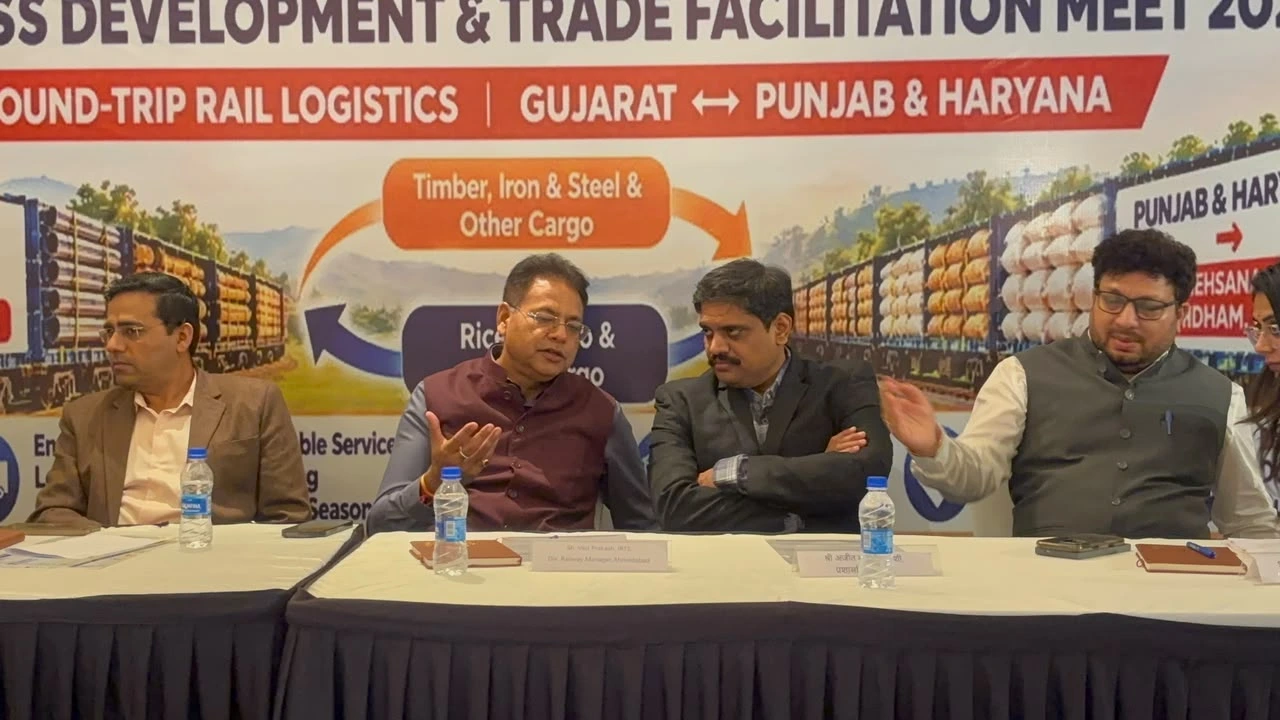
Chandigarh, November 20: Indian Railways and the Central Warehousing Corporation (CWC) are looking to strengthen freight connectivity between Gujarat, Punjab and Haryana, with a special focus on developing regular two-way cargo movement and integrated logistics facilities.
The initiative was discussed at ‘Trade Meet 2026’, jointly organised in Chandigarh on Friday by the Ahmedabad Division of Western Railway, Ambala and Firozpur Divisions of Northern Railway, and CWC.
The conference brought together railway and warehousing officials, farmers, traders, rice mill operators, industrialists, exporters and logistics companies to identify new opportunities for rail-based transportation and improve supply-chain efficiency.
A key highlight was the presentation of GST-based trade data and estimates for April 2022 to March 2024, which indicated considerable potential for freight movement between Gujarat and northern India.
The data projected rice movement of approximately 60.3 lakh tonnes from Punjab and Haryana towards Kutch, with Karnal alone accounting for an estimated 38.7 lakh tonnes. It also identified potential movement of 33.4 lakh tonnes of iron and steel and 2.2 lakh tonnes of timber and wood products from Gandhidham towards northern markets. Seasonal potato trade potential from Punjab and Haryana to Mehsana was estimated at 70,000 tonnes.
Addressing the gathering, Ahmedabad DRM Ved Prakash said the objective was to create commercially viable freight corridors that would benefit farmers, traders, industries and exporters while improving the utilisation of railway infrastructure.
He stressed that freight trains carrying agricultural produce from Punjab and Haryana to Gujarat should transport imported timber, salt, fertilisers, industrial goods and import containers on their return journeys.
Balanced cargo movement in both directions, he said, would minimise empty rake movement, improve wagon utilisation and make transportation more competitive.
Ved Prakash also highlighted the strategic importance of Gujarat’s ports, particularly Kandla, Mundra and Tuna-Tekra, in connecting northern India’s agricultural and industrial centres with domestic and international markets.
He said modern railway infrastructure, large-scale electrification, Dedicated Freight Corridors, specialised wagons and advanced freight terminals were transforming Indian Railways into a major driver of economic growth.
The DRM called for closer collaboration between Railways and CWC to provide end-to-end logistics solutions rather than limiting services to transportation between railway stations.
He said modern warehousing, cargo aggregation, safe handling facilities and better first- and last-mile connectivity could make rail freight services more accessible to farmers, small traders and local entrepreneurs.
The meet also discussed the economic and environmental benefits of shifting more goods transportation from roads to Railways. According to Ved Prakash, greater reliance on rail freight would help reduce logistics costs and carbon emissions while improving transportation capacity and reliability.
During an interactive session, traders, rice mill operators, potato producers, timber merchants, industrialists and exporters were invited to share their cargo volumes, destinations, seasonal requirements and infrastructure needs with railway officials.
CWC Chairman Rabindra Kumar Agarwal, Ahmedabad DRM Ved Prakash, Ambala DRM Vinod Bhatia and Ahmedabad Senior Divisional Commercial Manager Annu Tyagi were among those present.
The discussions covered freight terminals, scientific warehousing, bank financing, packaging, cargo handling and improved supply-chain coordination.
Organised under the theme ‘Store Safe. Move Smart. Grow Together’, the trade meet aimed to build stronger commercial partnerships between Gujarat and northern India.
Ved Prakash said efficient logistics infrastructure and stronger industrial connectivity would be crucial to achieving the vision of Viksit Bharat 2047, adding that the joint initiative would open new opportunities for farmers, traders and industries across the three states.
