
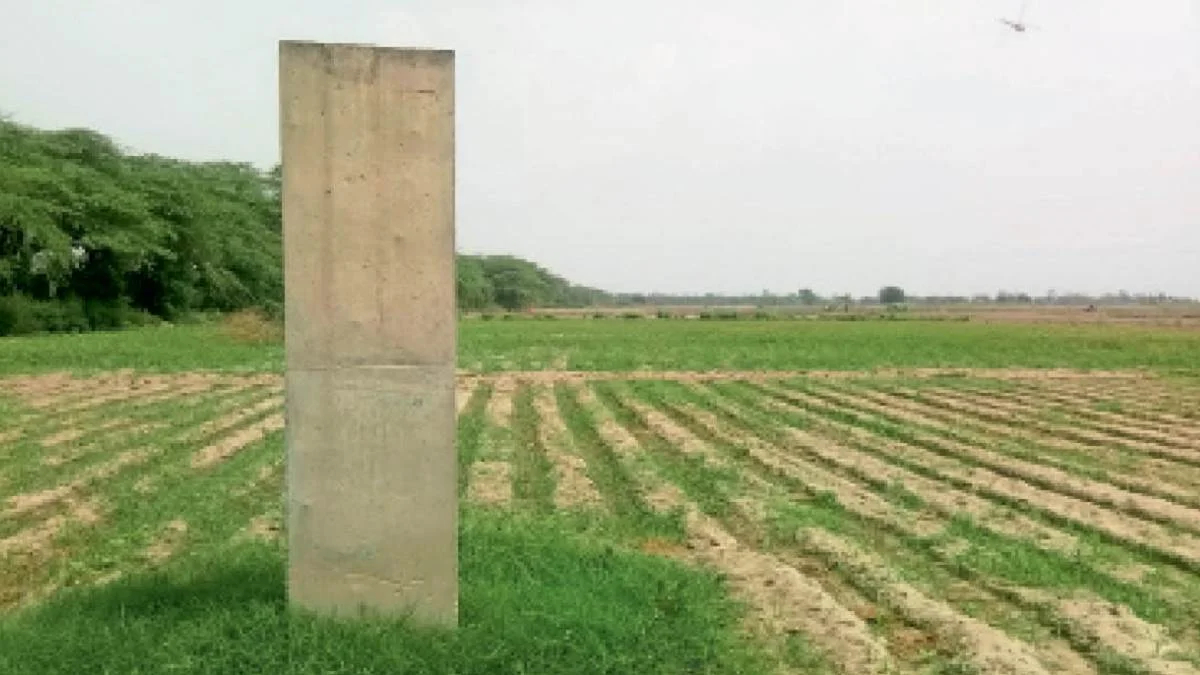
Karnal, June 5 — The Public Works Department (PWD) has resumed the long-pending project of erecting demarcation pillars along the Yamuna river to resolve a territorial dispute between Haryana and Uttar Pradesh that has remained unresolved for over seven decades.
Following state government approval, the PWD has allotted a ₹70 lakh tender for the construction of 30 pillars. Work is underway, and a second, larger tender worth ₹5 crore is in the final stages of allotment and expected to be awarded within the next two weeks.
“The first tender has been allotted and the agency has started work. The second tender has been opened. We expect to accelerate the remaining work shortly,” said Sandeep Singh, Executive Engineer, PWD (B&R).
The Haryana-UP border along the Yamuna has been a flashpoint since the 1950s due to disputes over thousands of acres in villages such as Chandrao, Bishangarh, Garhpur Tapu, and others. The river’s shifting course has fueled confusion and violent confrontations, resulting in several fatalities over the years.
In an effort to resolve the issue, the Dixit Committee in the 1970s proposed a boundary based on the Yamuna’s 1979 course. This later informed the Haryana-UP Alteration of Boundaries Act, 1979. Though boundary pillars were initially installed, many were washed away by floods or allegedly vandalized, creating further uncertainty, according to officials.
A renewed agreement between the two state governments in January 2020 paved the way for reconstruction of these pillars under the supervision of the Survey of India. The full plan involves marking a 300-km stretch of the Yamuna, from Yamunanagar to Palwal, with both states responsible for their respective shares.
The pilot phase began in October 2020 at Badi Kalan village in Karnal, where the Survey of India identified pillar locations. Of the 44 planned in this phase—24 by UP and 20 by Haryana—only nine were completed by Haryana before the project stalled due to logistical challenges and seasonal flooding.
As per the master plan, 604 demarcation pillars are to be installed in Karnal district alone, split equally between Haryana and Uttar Pradesh. Haryana is responsible for installing the odd-numbered markers, while UP will handle the even-numbered ones. Of the 302 locations marked for Haryana, 85 pillars have already been installed; the remaining are scheduled for the next phase of construction.
Farmers and local officials alike express hope that this revived effort will finally bring clarity and peace to the disputed region.
