
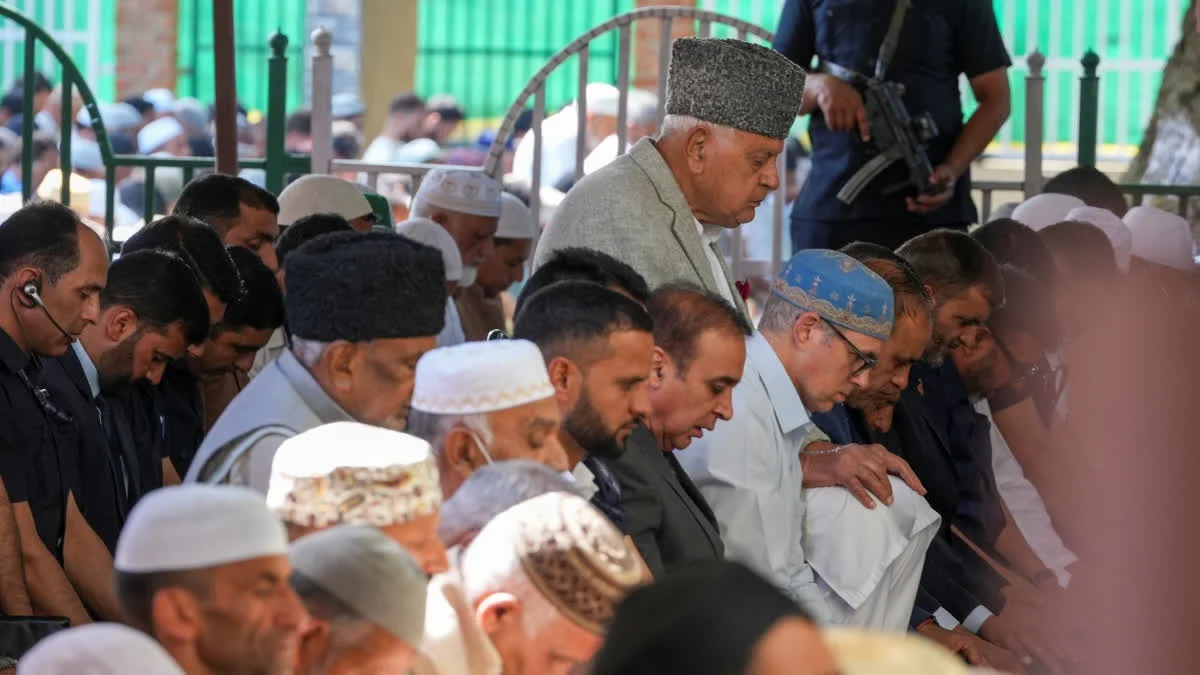
SRINAGAR, MAY 27 — Devotees filled historic mosques and community spaces throughout Jammu and Kashmir on Wednesday morning to perform traditional morning prayers, signaling the official start of Eid al-Adha festivities across the region.
The localized timing set the Union Territory apart from neighboring domestic territories. While Eid al-Adha (Bakrid) is being celebrated across most of India on May 28, 2026, following the moon sighting, the festival is being observed on May 27, 2026, in Jammu and Kashmir—including Srinagar—due to differing regional moon visibility. The early crescent sighting on May 17 by local clerics established a distinct lunar cycle for the valley, advancing the regional holiday schedule by twenty-four hours.
The timing permitted historic religious bodies to proceed with standard outdoor sermon arrangements. Chief cleric Mirwaiz Umar Farooq, who heads the Anjuman Auqaf Jama Masjid, stated that arrangements were finalized to offer prayers at Srinagar’s Eidgah early Wednesday morning, encouraging families to gather collectively for the annual sermons.
The festival itself serves as a foundational pillar of Islamic practice, coinciding with the conclusion of the annual Hajj pilgrimage to Mecca. It honors the absolute devotion of Prophet Ibrahim, who was prepared to sacrifice his son Ismail in obedience to a divine directive before an animal was miraculously substituted in his stead. The modern observance prioritizes values of faith, selflessness, and mutual aid.
Charitable outreach formed the core of the afternoon activities in Srinagar’s neighborhoods. Families prepared elaborate multi-course meals including traditional biryani and kebabs, ensuring that significant portions of the celebratory food and financial gifts were delivered directly to local orphanages and low-income households.
In administrative messages released to the press, the state government noted that public safety measures and market monitoring teams were deployed to handle the holiday traffic. Officials affirmed that the administration increased holiday provisions to support the three-day cycle, matching the spiritual importance of the season with adequate public service management.
