
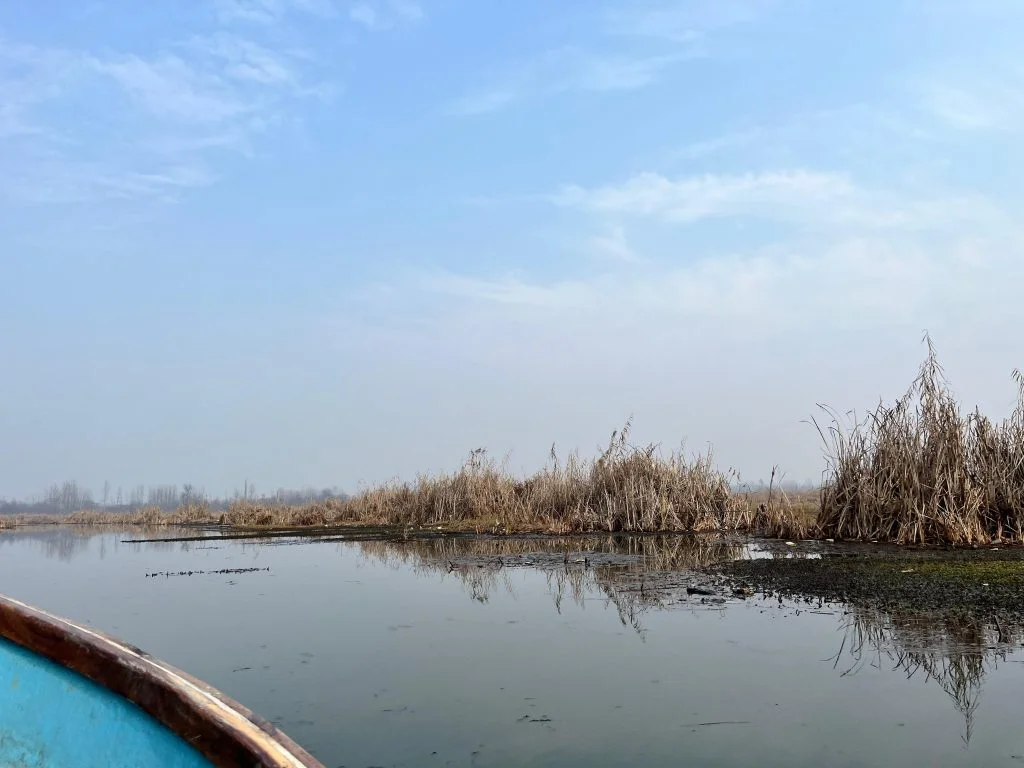
SRINAGAR, APRIL 18 — The Comptroller and Auditor General (CAG) has recommended an urgent overhaul of conservation strategies for Hokersar Lake, citing a failure to protect the wetland from anthropogenic pressures. The latest audit findings indicate that massive siltation and untreated sewage from surrounding catchments like HMT and Soibug have severely compromised the lake’s water quality and biodiversity.
Satellite imagery captured between 2005 and 2022 confirmed a surge in built-up infrastructure around the catchment area. The CAG asserted that the lake continues to receive inflows from these areas, aggravating pollution levels, especially in the absence of functional sewage treatment facilities. Research inputs cited in the report declared that dissolved oxygen levels are falling, leading to the disappearance of native aquatic species.
The audit further pointed to the failure of flood management infrastructure as a contributing factor to the lake’s decline. The Padshahi Bagh spill channel, originally designed to carry 17,000 cusecs, is now limited to just 6,000 cusecs due to debris and silt. The report stated that expenditure on de-weeding and dredging lacked scientific basis, as these activities were carried out without bathymetric surveys.
In response to the findings, the Wildlife Protection Department affirmed that a new wetland policy is currently under consideration. Officials stated that efforts are underway to remove unwanted vegetation and retrieve encroached areas. However, the CAG maintained that a holistic plan addressing hydrology and pollution is the only way to reclaim the land and restore the ecological health of the site, which has been a protected reserve since 1945.
