
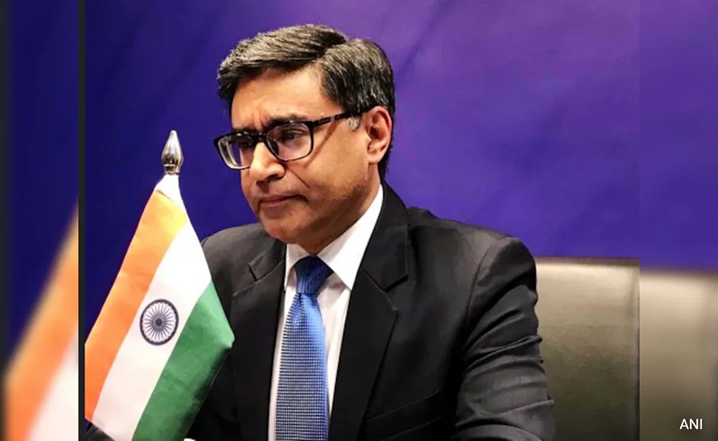
New Delhi, May 24 – India’s decision to place the Indus Waters Treaty in abeyance is a direct response to Pakistan abandoning the spirit of “goodwill and friendship” that underpins the 1960 agreement, the Ministry of External Affairs (MEA) has told a parliamentary panel.
According to official briefings, including one by Foreign Secretary Vikram Misri, the move follows Pakistan’s consistent stonewalling of India’s requests for direct talks and its continued backing of cross-border terrorism—most recently demonstrated in the April 22 terror attack in Pahalgam.
“The treaty in its preamble speaks of a spirit of goodwill and friendship,” Misri told the committee. “But all these principles have effectively been held in abeyance by Pakistan.”
The MEA has argued that India’s stance is not only a reaction to recent hostilities but also rooted in long-standing changes in the ground realities that demand renegotiation. “There is a compelling case for the treaty to be updated. It is based on engineering knowledge and hydrological data from the 1950s and early 1960s, which no longer reflect today’s circumstances,” a ministry official said.
India will be defending this position on the global stage, with seven multi-party delegations already dispatched to 33 countries and the European Union to explain New Delhi’s perspective following the escalation in tensions with Islamabad.
Key factors cited for renegotiation include climate change, glacier retreat, altered river flows, demographic pressures, and India’s pursuit of clean energy. The MEA said these shifts have fundamentally altered the treaty’s framework.
“The unrelenting cross-border terrorism from Pakistan interferes with our ability to exploit the treaty as per its provisions,” the ministry told the committee.
Foreign Secretary Misri also referred to Operation Sindoor, India’s post-attack response, as part of the broader strategy to reassert its position on both national security and water sovereignty.
Prime Minister Narendra Modi has underscored the gravity of the situation, declaring, “Blood and water cannot flow together,” drawing a firm red line in India’s policy on bilateral agreements with Pakistan amid persistent hostilities.
