
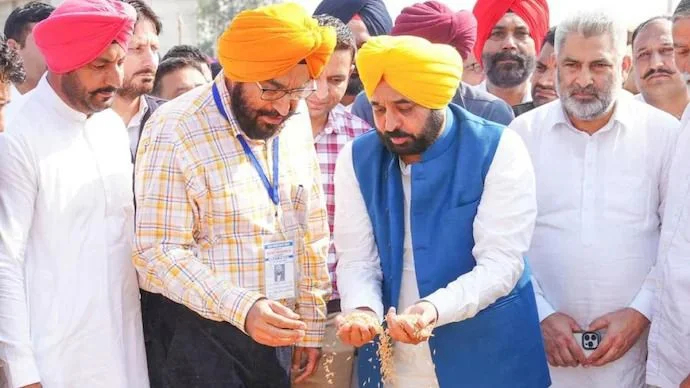
Chandigarh, November 15: The Punjab government has announced what it called an unprecedented paddy procurement season, confirming that the state purchased more than 150 lakh metric tons of paddy even as several regions battled flood damage earlier this year. Officials said the scale of procurement and the timely disbursal of payments marked a significant moment for Punjab’s rural economy.
As per official figures, mandis recorded arrivals of 1,51,80,075.88 metric tons of paddy up to November 10, out of which 1,50,35,129.93 metric tons were procured — nearly 99% of the total arrival. The government attributed the high completion rate to strengthened procurement infrastructure, improved monitoring mechanisms and better coordination across departments.
Food and Civil Supplies Minister Lal Chand Kataruchak has been overseeing field operations and visiting procurement centres. The government noted that enhanced digital systems and modernised logistics contributed to faster movement of grain and reduced waiting time for farmers.
More than 11 lakh farmers have received Minimum Support Price payments so far. Patiala led the state in MSP disbursals, officials said. Nearly 135 lakh metric tons — around 90% of the procured stock — have already been lifted from mandis, helping keep procurement centres decongested at a time of heavy arrivals.
The government said one of the season’s most significant achievements was the rapid payment cycle. More than ₹34,000 crore has been credited directly into farmers’ accounts, with most payments reaching them within 48 hours of procurement. Officials said the timeline ensured farmers could immediately begin preparing for the next sowing season.
Chief Minister Bhagwant Singh Mann said the season reflected the unity of Punjab’s farming community and the administrative machinery. “This achievement belongs to Punjab’s hardworking farmers, and to the officers and employees who worked round the clock,” he said. “Our objective is not only to procure paddy but to uphold the dignity and financial security of every farmer.”
The state reiterated that its “Farmer-First Policy,” advance planning and real-time mandi oversight had shaped the efficient procurement model that officials now call an example for the rest of the country.
According to the government, the season stands as a reminder that clear policy direction and strong administrative structure can overcome natural disruptions and deliver stability to the agricultural sector. Officials said the operation has renewed trust among farmers and underscored public confidence in the procurement process.
