
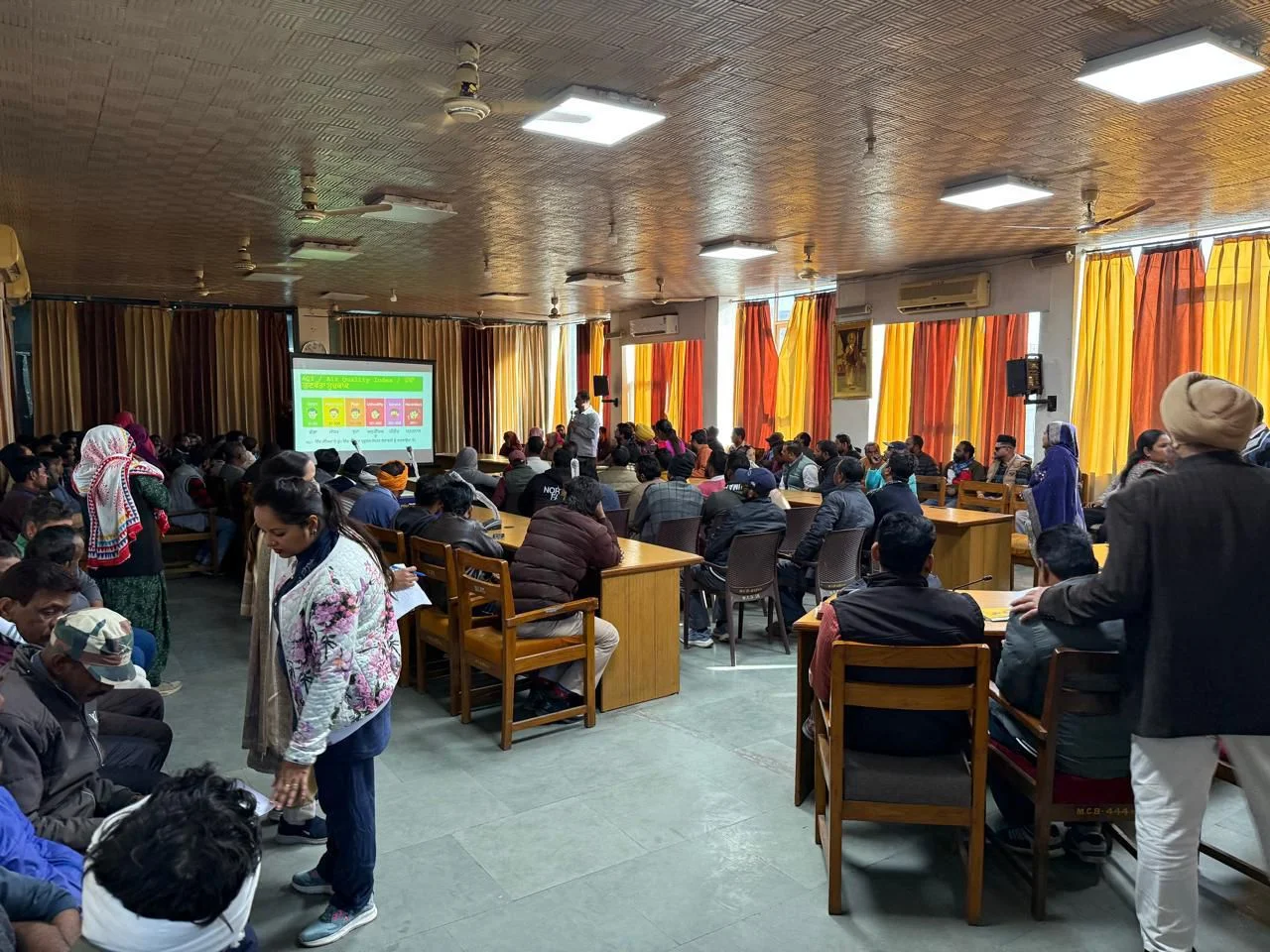
Patiala, April 30: To improve ambient air quality, the Punjab Pollution Control Board has trained 13,023 sanitation and horticulture workers in modern waste management techniques. The statewide effort, which spanned several months, focused on eliminating the practice of open waste burning, which remains a major contributor to declining air standards in the region.
The training program concluded Wednesday, following sessions in all 166 Urban Local Bodies across the state. Chairperson Reena Gupta stated that by equipping regular and informal waste workers with scientific tools, the board aims to resolve pollution issues at their source. She declared that the initiative recognizes these individuals as vital partners in the state’s mission to achieve cleaner air.
During the interactive workshops, workers were educated on the health risks associated with suspended particulate matter and the visible symptoms of pollution-related illnesses. The training also simplified complex environmental concepts and highlighted efficient disposal practices. PPCB officials affirmed that the inclusion of ethical and community-based messaging helped workers understand the broader impact of their roles.
Chairperson Reena Gupta affirmed that the board is seeking mass public support to curb garbage burning, warning that local authorities will continue to issue challans of up to Rs 25,000 for non-compliance. She maintained that residents should report instances of waste burning to help the board maintain the momentum gained through this training.
The project was part of a broader environmental overhaul inaugurated last year in Patiala. Member Secretary Lavneet Dubey and other senior officials stated that the success of this drive provides a scalable model for other states seeking to integrate informal workers into formal environmental management systems.
