
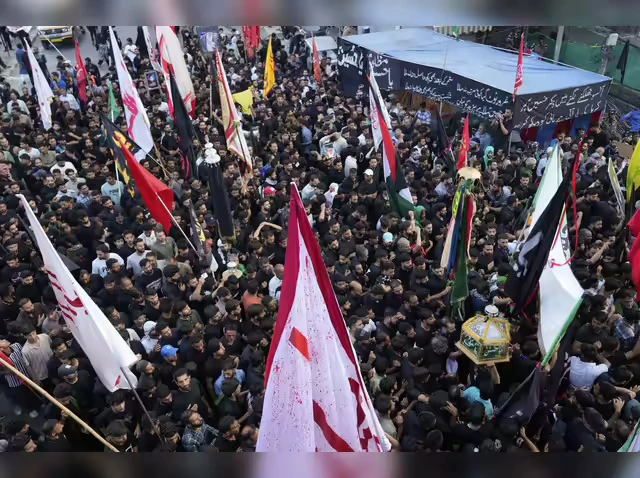
Chandigarh, July 6: As the Islamic month of Muharram begins, millions of Muslims across the world—particularly those belonging to the Shia sect—commemorate one of the most tragic and defining episodes in Islamic history: the martyrdom of Imam Hussain, the grandson of Prophet Muhammad, in the Battle of Karbala in 680 AD.
Muharram, the first month of the Islamic lunar calendar, is one of the four sacred months in Islam. For Shia Muslims, however, it marks not celebration but solemn remembrance—a period of mourning that reaches its emotional and spiritual peak on the 10th day, known as Ashura. On this day, Imam Hussain and his companions were brutally killed on the plains of Karbala, in present-day Iraq, standing against tyranny and injustice.
The events of Karbala are not merely historical but deeply symbolic. In 680 AD, after the death of Prophet Muhammad, a struggle over leadership and legitimacy unfolded within the Muslim community. Yazid ibn Muawiya, the Umayyad ruler, demanded allegiance from Imam Hussain. Hussain, known for his piety, knowledge and unwavering commitment to truth, refused to endorse Yazid’s corrupt and oppressive regime.
“Someone like me can never give allegiance to someone like Yazid,” Imam Hussain is famously quoted as saying. His defiance was not political ambition but a moral stance—a refusal to legitimize injustice through silence or submission.
Despite being aware of the consequences, Hussain, along with his family members and a small group of loyal followers, embarked on a journey from Medina to Kufa. En route, they were intercepted and forced to camp in the arid desert of Karbala. On the 10th of Muharram, surrounded by Yazid’s army of thousands, cut off from food and water for days, and vastly outnumbered, Imam Hussain and his 72 companions—including his six-month-old son Ali Asghar—were massacred.
Imam Hussain’s martyrdom is mourned not just as a loss but as an act of supreme resistance. His death is seen as a victory of moral conviction over brute power. Shia Muslims view him as a symbol of righteousness who sacrificed everything for the principles of justice, dignity, and faith.
For believers, Hussain did not die in defeat. His refusal to compromise has continued to inspire generations to stand against oppression, injustice, and falsehood—values that resonate far beyond religious boundaries.
Dr. Ali Jafri, a Shia scholar, explains, “Karbala is not just about grief. It is about standing firm for truth, even if it means standing alone. That is why Hussain is not just the hero of Shias, but of all who love justice.”
Across the Shia world, Muharram is marked by a series of rituals, including majlis (mourning gatherings), recitations of elegies and historical narratives, processions, and symbolic re-enactments of the Karbala tragedy. These public expressions of mourning reach their height on Ashura.
Processions of men, women and children dressed in black move through streets chanting “Ya Hussain” and beating their chests in rhythmic unison (matam) to express grief and solidarity. In some traditions, acts of self-flagellation are performed, though many scholars today emphasize symbolic mourning over physical acts.
Black flags and banners are prominently displayed in homes, mosques, and public squares. These carry powerful inscriptions: verses of poetry mourning Hussain’s sacrifice, slogans of resistance like “Every day is Ashura, every land is Karbala,” and names of the martyrs of Karbala. The colour black, signifying mourning, dominates the visual landscape throughout the month.
Replicas of Imam Hussain’s shrine and symbolic representations of his horse Zuljanah, tents, and the alam (standard) are also carried in processions. The alam, a banner representing the standard of Abbas ibn Ali, Hussain’s half-brother and standard-bearer at Karbala, is revered as a sacred symbol of loyalty and bravery.
Though primarily observed by Shia Muslims, the message of Karbala transcends sectarian lines. Many Sunni Muslims also commemorate Ashura, though their focus is often on the fasting tradition associated with Prophet Moses. Still, the sacrifice of Imam Hussain is widely respected across the Muslim world.
Beyond the rituals and mourning, Muharram serves as an annual reminder of the timeless struggle between justice and tyranny. In an age where moral compromise often comes easily, the memory of Karbala challenges individuals and societies to ask: What would we stand for, and what would we sacrifice?
In the words of the revered poet Josh Malihabadi:
“Insaan ko bedar toh ho lene do,
Har qaum pukaregi hamare hain Hussain.”
(Let humanity awaken, and every nation shall claim, Hussain is ours.)
Through grief and remembrance, Muharram becomes not just a ritual, but a powerful call to conscience—rooted in the blood-soaked sands of Karbala, yet alive in every soul that resists injustice.
