
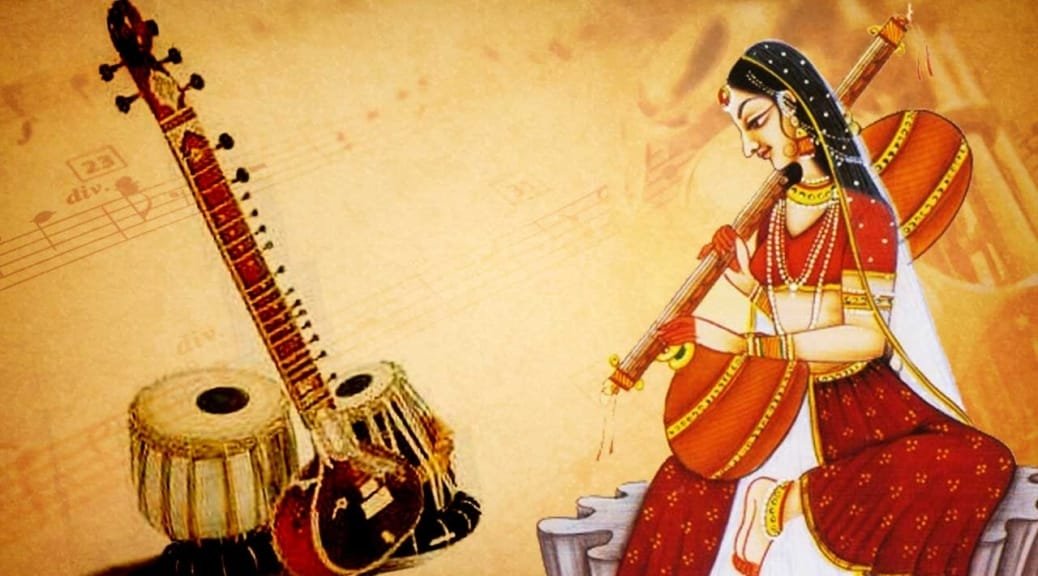
Chandigarh, September 22: Indian classical music, one of the world’s oldest surviving traditions, is not merely an artistic form but a deeply spiritual discipline that has evolved over thousands of years. Its significance lies not only in the melodies and rhythms that echo across concert halls today but in its origins—woven into the fabric of India’s cultural, philosophical and religious life.
The origin of Indian classical music is often traced back to the Sama Veda, one of the four Vedas compiled around 1500 BCE. The Sama Veda contained hymns meant to be sung rather than spoken, setting the foundation for the earliest forms of melody and chant. These chants were more than religious incantations; they carried structured tonal patterns that eventually evolved into ragas and talas—the backbone of Indian classical music.
The early sages believed sound was sacred, a divine vibration known as Nada Brahma—“the universe is sound.” This philosophy placed music at the heart of spiritual life, making it an essential medium for connecting the human and the cosmic. The Vedic chants, often performed in precise pitch and rhythm, were seen as a way to preserve harmony within the self and the universe.
Over centuries, Indian music expanded beyond the strictly Vedic context. The Natya Shastra, written by Bharata around the 2nd century BCE, was a landmark text that documented performance traditions in music, dance, and drama. It codified scales, modes, and rules of performance that still resonate in today’s practice.
Music also found a home in temples. The devotional movement, particularly between the 6th and 15th centuries, brought bhajans, kirtans, and keerthanas into prominence. Saints like Tulsidas, Meerabai, Purandara Dasa, and Thyagaraja infused spirituality into song, making music both accessible and emotionally resonant.
As kingdoms flourished, royal courts became another crucial setting. Rulers patronized musicians who refined the grammar of ragas and talas, leading to sophisticated traditions. By the medieval era, two distinct schools emerged: Hindustani classical music in North India, influenced by Persian and Mughal traditions, and Carnatic classical music in the South, which retained a purer devotional orientation.
Central to Indian classical music are ragas (melodic frameworks) and talas (rhythmic cycles). A raga is not just a scale—it is a mood, a universe of its own. Each raga carries rules about how notes are approached, their emotional flavor, and the times of day or seasons when they are most effective. Some ragas are believed to heal, others to awaken joy or sorrow. For instance, Raga Malhar is traditionally associated with invoking rain, while Raga Bhairavi often concludes performances with a sense of serenity.
Similarly, talas are intricate rhythmic cycles, ranging from the simple eight-beat tintal to complex patterns of 16, 32, or even more. The interplay between melody and rhythm creates a dynamic space for improvisation—an element that distinguishes Indian classical music from Western traditions.
For centuries, Indian classical music has been more than entertainment. It has been regarded as a form of sadhana (spiritual practice). Classical musicians often dedicate years to mastering the art under a guru, a process that demands discipline, humility, and devotion. The practice is believed to purify both the performer and the listener, creating an atmosphere of transcendence.
The music also reflects India’s cultural diversity. While Carnatic music flourished with compositions by saints like Thyagaraja and Muthuswami Dikshitar, Hindustani music developed distinct forms such as dhrupad, khayal, thumri, and ghazal. Instruments like the sitar, tabla, veena, mridangam, and sarod became symbolic of these traditions. Each carries its own lineage, connecting the modern listener to centuries of heritage.
Indian classical music has not remained confined to the subcontinent. In the 20th century, maestros like Ravi Shankar, Bismillah Khan, Bhimsen Joshi, MS Subbulakshmi, and Zakir Hussain introduced global audiences to its depth. The Beatles’ collaboration with Ravi Shankar in the 1960s is one example of how Indian ragas influenced Western music and even shaped the countercultural movement.
Today, music festivals across Europe, America, and Asia feature Indian classical performances, drawing audiences who may not understand the technicalities but are moved by its meditative and emotive power. Universities and conservatories around the world teach it, ensuring its continuity beyond Indian shores.
Despite its rich legacy, Indian classical music faces challenges in a fast-paced, digital-driven world. Shorter attention spans, commercialization, and the dominance of popular music sometimes overshadow the subtler art of ragas and talas. Yet, many young musicians are turning to this tradition, blending it with contemporary styles while remaining rooted in its core philosophy.
Institutions like the ITC Sangeet Research Academy in Kolkata and the Madras Music Academy continue to nurture talent, while online platforms make performances more accessible. The annual music season in Chennai, dedicated to Carnatic music, and the Harivallabh Sangeet Sammelan in Jalandhar for Hindustani music are prime examples of traditions adapting while staying true to their origins.
At its essence, Indian classical music is not frozen in time. It is a living, breathing art form that continues to evolve while carrying with it the voices of saints, poets, and maestros of centuries past. Its endurance speaks to its profound ability to connect human emotions with cosmic rhythm.
As the world grows increasingly fragmented, Indian classical music reminds us of a truth that has echoed since the Vedic chants: that sound itself is divine, and through it, harmony can be found.
