
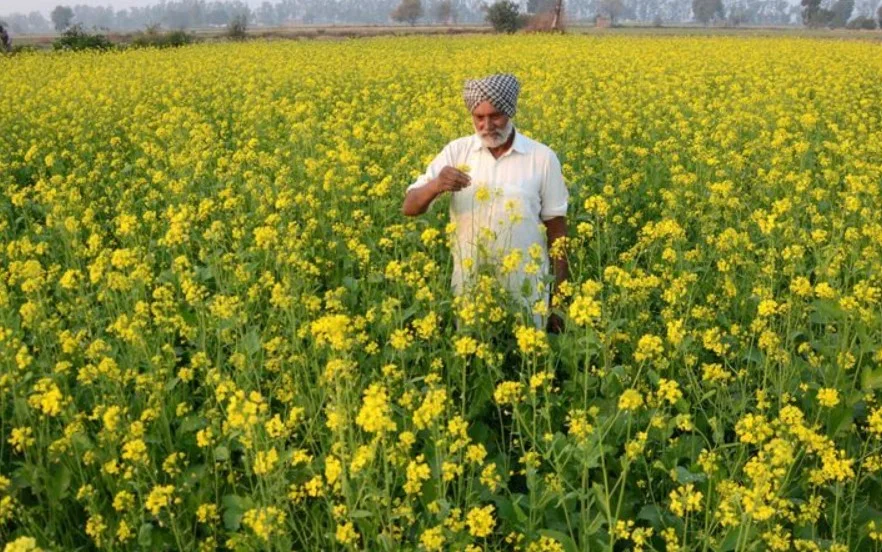
MOGA, Dec 25: Agriculture experts and officials in Punjab are calling for a renewed push toward mustard and other oilseed crops, warning that shrinking acreage has left the state heavily dependent on costly imports.
Punjab currently meets only 3% of its edible oil needs through local production, with most imports coming from abroad. Retired agriculture officer Dr. Jaswinder Singh Brar said the decline in oilseed farming has long-term economic consequences.
“Punjab’s soil is ideal for mustard, yet we import sunflower oil from countries like Ukraine and Russia at high prices,” Brar said. “This dependency can be reduced if farmers return to oilseed cultivation.”
At the national level, India produces about 120 lakh tonnes of edible oil but imports nearly 140 lakh tonnes annually to meet demand. The total area under mustard and other oilseeds across the country stands at about 9.18 lakh hectares.
Dr. Harpreet Kaur, joint director at the Punjab Agriculture Department, said the state has brought around 51,000 hectares under oilseed cultivation this financial year.
“Farmers still prioritize wheat and paddy, but mustard can be a profitable alternative,” Kaur said. “We are working to encourage diversification.”
In Moga district, officials say progress is already visible. Chief Agriculture Officer Dr. Gurpreet Singh said the area under mustard and oilseeds has more than doubled.
“It increased from around 834–957 hectares between 2022 and 2025 to 2,048 hectares this year,” he said. “Punjab Agricultural University has developed new varieties that offer better yields and returns.”
Administrative support is also being extended to strengthen the value chain. Moga Deputy Commissioner Sagar Setia said financial assistance is available for processing infrastructure.
“Under the National Mission on Edible Oils–Oilseeds, Farmer Producer Organizations can receive up to Rs 9.90 lakh to set up oil processing units with a capacity of 10 tonnes per day,” Setia said. “This can improve marketing and income for farmers.”
Officials believe such measures could gradually break Punjab’s dependence on the wheat-paddy cycle, provided procurement and processing gaps are addressed alongside crop diversification efforts.
