
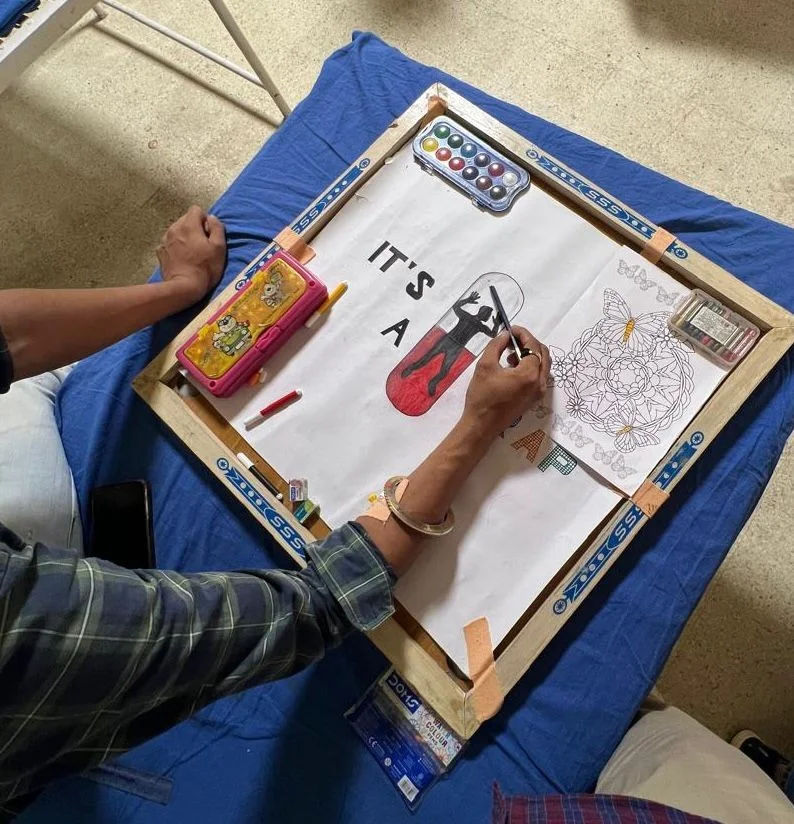
CHANDIGARH, JUNE 8 — Government de-addiction infrastructure across Punjab has transformed traditional recovery routines by introducing expressive arts to help patients document their personal journeys and overcome deep-seated trauma. The state initiative combines standard psychiatric medicine with visual arts and craft-making across 15 districts, helping patients safely navigate the volatile emotional states common during early recovery.
The innovative strategy, driven by the regional administration’s public safety mandate, aims to lower relapse rates by providing vulnerable citizens with non-verbal tools to process acute anxiety.
“Art therapy offers them a safe outlet for expression through drawing, colouring and similar activities,” noted Navneet Kaur, a mental health professional operating within the Swami Vivekanand De-addiction facility. Kaur stated that introducing multi-modal creative blocks has helped patients achieve a deeper sense of inner calm, effectively breaking down resistance to traditional behavioral therapy.
The operational layout reordered the standard priorities of state clinical wards, setting aside dedicated weekly blocks for tactile projects such as flower arrangement and watercolor design. Medical reviews show that the artistic exercises help patients organize their thoughts, directly addressing the chronic depression that often drives individuals back to substance abuse.
Recovering individuals from rural hubs like Tarn Taran and Raja Sansi stated that the inclusive program provided an essential buffer during the physical strains of detoxification. Participants affirmed that focusing on positive, creative tasks redirected their attention away from chemical dependency, giving them a constructive framework to rebuild their confidence.
State health bulletins confirmed that the specialized fellowship network will continue to train rural medical staff in advanced expressive therapy techniques. Public health administrators maintained that managing addiction requires comprehensive mental health infrastructure, concluding that these patient-focused exercises offer recovering individuals a practical foundation on which to stabilize their futures.
