
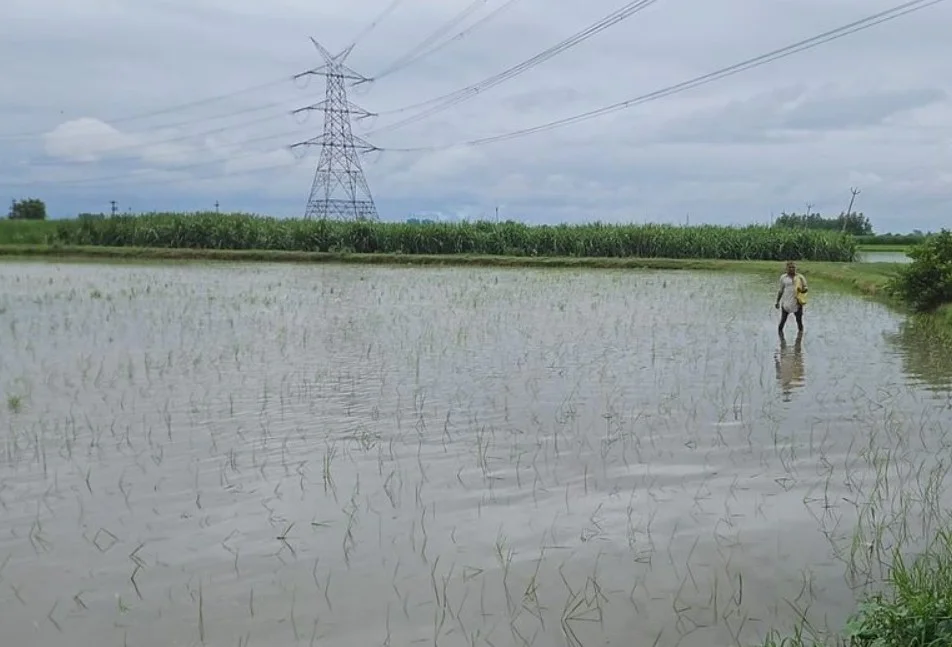
Karnal, July 10: Continuous rainfall over the past seventy-two hours has successfully revived Haryana’s paddy transplantation cycle, rescuing the crop from a sluggish start caused by a deficient June monsoon. The agricultural department confirmed that fields across the region are now adequately flooded, neutralizing earlier fears regarding the destructive Fiji virus that often threatens early-stage saplings. With the weather shifting in their favor, regional authorities reported that approximately eighty-five percent of the targeted paddy area in Karnal district has now been covered.
The sudden influx of rainwater has directly improved farming economics by reducing the necessity for immediate chemical interventions. Dr Wazir Singh, Deputy Director Agriculture, Karnal, affirmed that the showers have proved to be a boon for the crop by curbing cultivation costs for local growers. Statistics from the India Meteorological Department in Chandigarh showed substantial precipitation across the state, with Yamunanagar recording 64mm, Sonepat receiving 41.5mm, and Palwal registering 38.5mm of rain.
The ongoing sowing drive is part of a massive statewide initiative to secure millions of hectares of staple crops. Agricultural officials declared that the department has set a target of bringing 15.60 lakh hectares under paddy cultivation across the state. Within this plan, Kurukshetra is tasked with covering 1.20 lakh hectares, Hisar is assigned 1.05 lakh hectares, while Yamunanagar, Ambala, and Sonepat have each been designated a cultivation target of 90,000 hectares.
The farming community welcomed the changing weather patterns after weeks of climate-related stress. Kewal, a farmer from Nagla village, maintained that this rain is a blessing for paddy growers because it has provided sufficient water for the transplantation process. Other local agriculturists from the Indri block asserted that the dry weather in June had been a massive worry, but the arrival of these consistent showers has fully resolved their irrigation anxieties and restored optimism for the upcoming harvest.
