
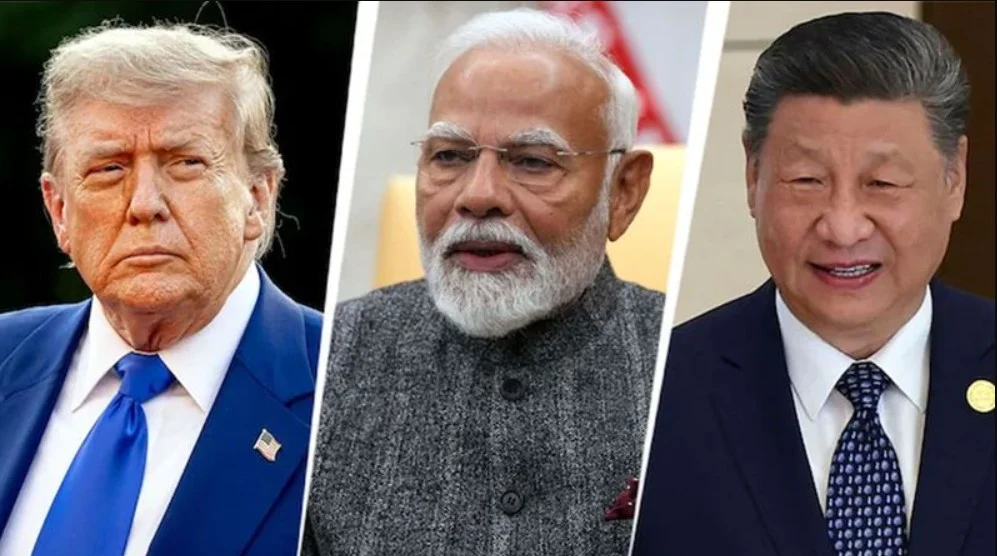
New Delhi, July 15: A newly unveiled US Senate bill seeks to penalize major international trading partners by authorizing tariffs up to 100 percent on imports from countries that persist in purchasing Russian oil. The draft legislation focuses its penalties exclusively on five main importers of Russian energy, placing India and China at the center of the trade dispute alongside Slovakia, Hungary, and Azerbaijan. In contrast, the text explicitly exempts 15 European nations that still receive Russian natural gas, with authors maintaining that those specific gas volumes represent a minor portion of their collective energy needs.
The commercial confrontation highlights a sharp divide between American foreign policy goals and the domestic priorities of developing economies. India has drastically scaled up its intake of discounted Russian crude since global energy markets shifted in 2022. Officials in New Delhi have repeatedly maintained that their sourcing choices are dictated purely by national self-interest, intended to shield domestic consumers from soaring global fuel prices while operating entirely on market conditions.
The legal framework of the bill is designed to systematically dismantle the revenue networks that sustain foreign state budgets. Beyond the targeted import duties, the text lays out aggressive sanctions aimed directly at prominent business figures, oligarchs, and the Russian leadership. A key architect of the bill, Democratic Senator Richard Blumenthal, stated that the targeted up to 100 percent tariffs had been narrowly crafted to isolate the single largest revenue streams, affirming that the ultimate goal remains minimizing the financial resources available for external conflicts.
The successful passage of the draft remains dependent on navigating a complex legislative landscape in Washington. Though the late Senator Lindsey Graham fiercely championed the policy alongside Blumenthal, the bill must still win approval across the entire congressional framework. New Delhi has already signaled its opposition to the strategy, asserting that it does not recognize or support unilateral trade sanctions that lack a direct mandate from the United Nations.
