
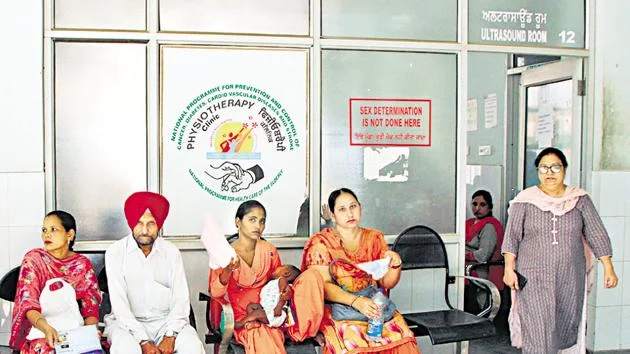
CHANDIGARH, July 17— The expansion of the Mukh Mantri Sehat Yojana has provided a critical safety net for thousands of families across Punjab as medical centers record a seasonal uptick in dengue, malaria, and gastroenteritis. The state-sponsored health program guarantees zero-cost medical care at all empanelled public and private facilities, completely eliminating out-of-pocket spending for vulnerable citizens. Financial reports indicate that the government absorbs the entire cost of treatment, providing specialized packages tailored for monsoon illnesses close to the doorsteps of rural communities.
Health Minister Dr Balbir Singh declared that structural provisions are fully operational, reassuring the public that economic limitations will not stand in the way of proper healthcare access during the rainy season. The administration has actively scaled up testing capacities at sub-divisional levels to handle incoming patient loads efficiently.
“Eligible beneficiaries under the Mukh Mantri Sehat Yojana can access timely, cashless treatment without worrying about the cost of care,” Minister Dr Balbir Singh asserted, while also reminding citizens to clear stagnant water from residential areas to disrupt breeding cycles.
Clinical teams stress that the initial days of a fever are crucial for diagnosing overlapping conditions like enteric fever, viral hepatitis, and acute dehydration. Medical officers report that early intervention at local Primary Health Centres prevents the clogging of larger district referral units.
“During the early stage, these types of fever can be treated safely and effectively at a Community Health Centre and even at the Primary Health Centre level through the Mukh Mantri Sehat Yojana,” Senior Medical Officer Dr Raj Kumar maintained. He added that an early diagnosis saves lives and stops severe clinical regressions.
For families dependent on daily wages, the streamlined registration process inside the hospitals has proved invaluable. Patients are enrolled directly upon admission, allowing immediate therapeutic intervention without requiring advance deposits or cumbersome paperwork.
“I recently received treatment under the Mukh Mantri Sehat Yojana worth ₹8,400,” stated Balwinder Kaur, a tailor from Amritsar who was admitted with a critical fever. “The timely treatment and financial support eased my burden and allowed me to focus on my recovery.”
Operational reviews conducted by the State Health Agency reflect a smooth distribution of claims across the Malwa and Majha belts, demonstrating uniform scheme penetration. The data shows that the state healthcare system effectively balances common seasonal interventions with advanced medical procedures, ensuring comprehensive coverage for both routine infections and complex critical care operations on a daily basis.
