
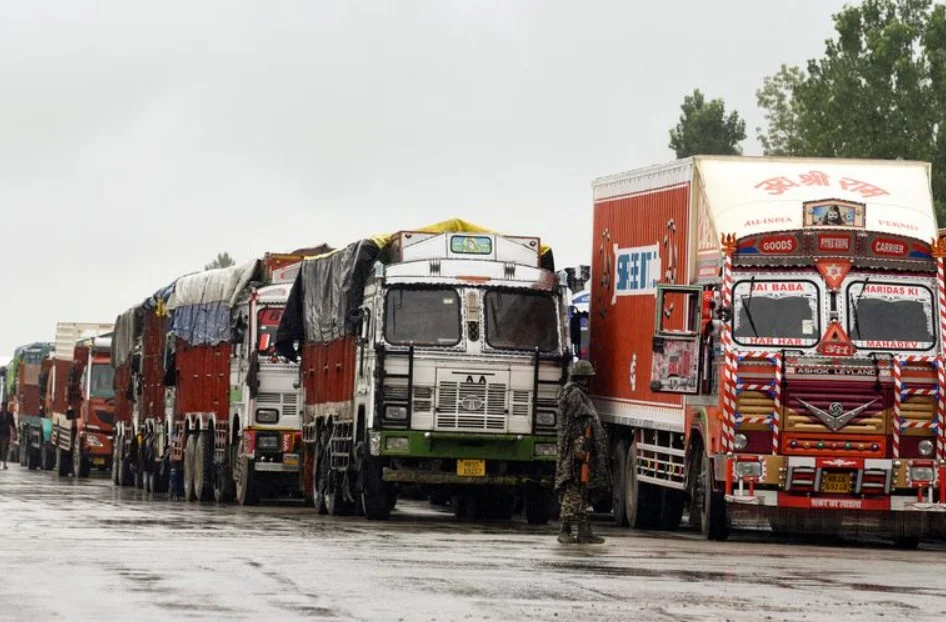
A massive traffic backup extending sixteen kilometers has immobilized freight transport near the Sonauli border crossing in Maharajganj as damaged highways in Nepal continue to block commercial access routes. Goods vehicles carrying essential supplies toward Kathmandu and regional markets remain parked along the national highway, prompting Indian security personnel to regulate vehicle queues and maintain highway access near Nautanwa.
Border monitoring operations expanded across neighboring sectors to keep trade arteries orderly while infrastructure repairs progress across the border.
Circle Officer Basant Singh declared that border security forces have stepped up oversight along the Sonauli transit zone, noting that local police leadership has been directed to ensure constant field readiness.
The transport halt has also forced local day laborers and craftsmen employed in Nepal to seek alternative transit routes through neighboring states to return safely to Indian villages.
Raj Kumar Gautam, a carpenter returning home to Maharajganj by bus via Bihar, maintained during communications with his family that panic and destruction were widespread across flooded towns, leaving many families without shelter.
Further downriver in Kushinagar district, emergency response personnel and revenue officers intensified monitoring protocols along seventeen point five kilometers of vulnerable river levees connecting Narwajot to Ahirauli.
Additional District Magistrate Vaibhav Mishra asserted that local authorities have elevated precautionary measures across flood-prone villages along the riverbanks.
National and state disaster response forces, supported by specialized water police units, remain actively deployed in surrounding rural areas to handle potential emergency evacuations should water levels increase further.
