
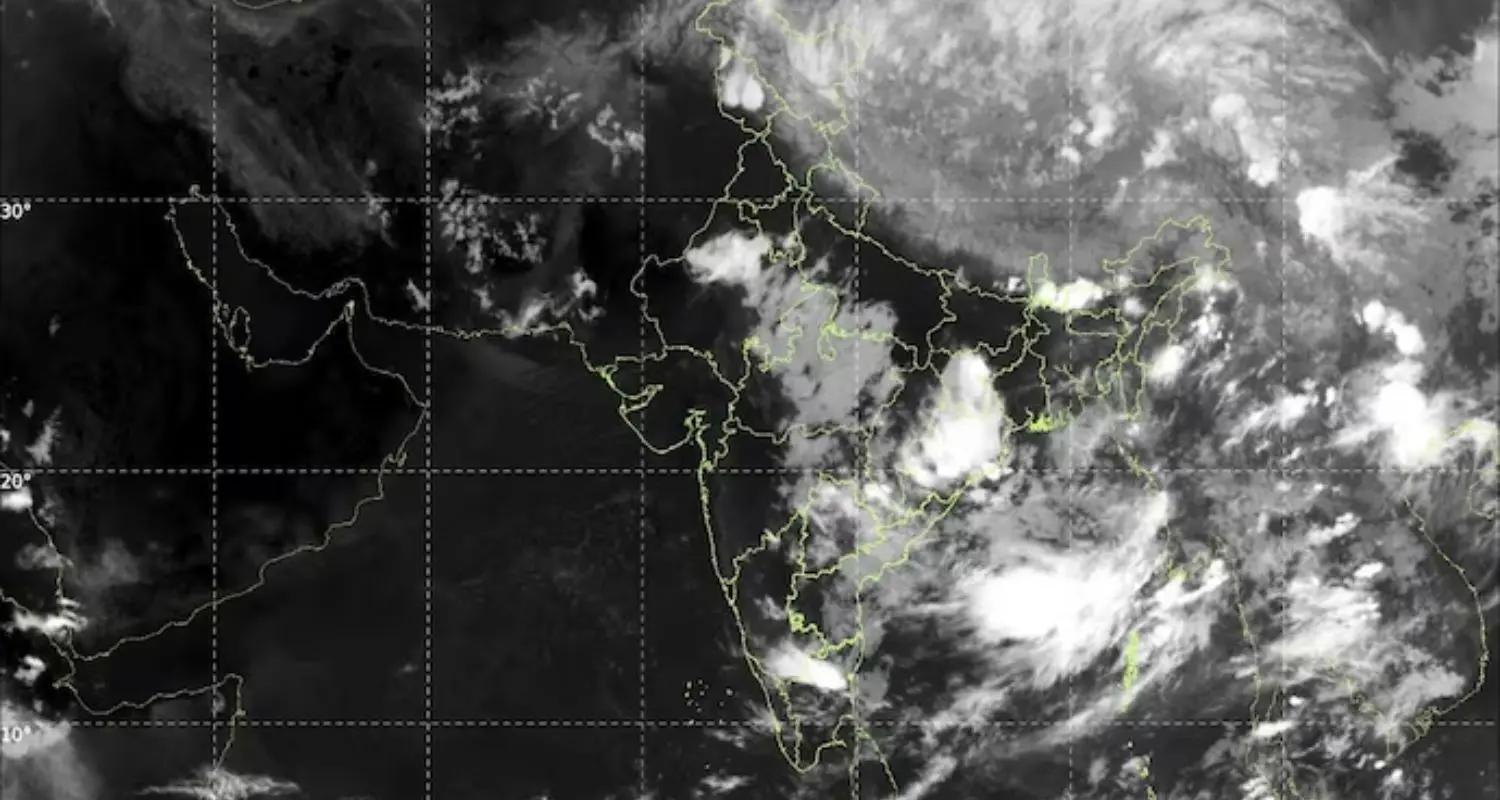
Chandigarh, June 15: An unusual atmospheric pattern has disrupted the advancement of India’s southwest monsoon, resulting in a nationwide rainfall deficit of 28 percent. New statistics from the India Meteorological Department show that the country registered 34.3 mm of rain against the standard expectation of 47.7 mm for the period spanning June 4 to June 14. This initial shortfall has left vast agricultural tracts in the eastern, central, and peninsular regions facing unexpected dryness, while only a small number of pockets have experienced normal or heavy showers.
The sluggish performance has caught weather researchers by surprise, given that long-range seasonal forecasts issued in May had universally pointed toward a robust start to the summer rains. Favorable oceanic indicators had led to expectations of an active early phase, but unexpected dynamics in the upper layers of the atmosphere have temporarily overridden those oceanic influences.
Meteorologists clarified that the current drought-like conditions do not stem from a shortage of environmental moisture. Instead, the delay is tied to an upper atmospheric battle taking place several kilometers above the earth’s surface. The core issue involves the westerly jet stream, an upper-level wind corridor that has settled significantly further south than normal for the month of June.
This unusual positioning has actively suppressed the formation of the crucial easterly jet stream, which normally acts as the engine for widespread monsoon distribution. Lacking a strong atmospheric push, rain-bearing systems have been left without direction, staying confined to coastal rims or dissipating before traveling inland. This has disrupted the usual expansion of summer showers, though small sections of northwest India did experience short, scattered downpours caused by separate, highly localized weather systems.
Looking ahead, weather specialists affirmed that the monsoon could still recover its rhythm during the latter half of June. Current simulation models indicate a likely strengthening of the upper-level easterly jet stream following June 20. Such a development would allow stalled rain systems currently situated over the Bay of Bengal to migrate across the coast, potentially reorganizing the seasonal wind patterns and narrowing the rainfall gap in the coming weeks
