
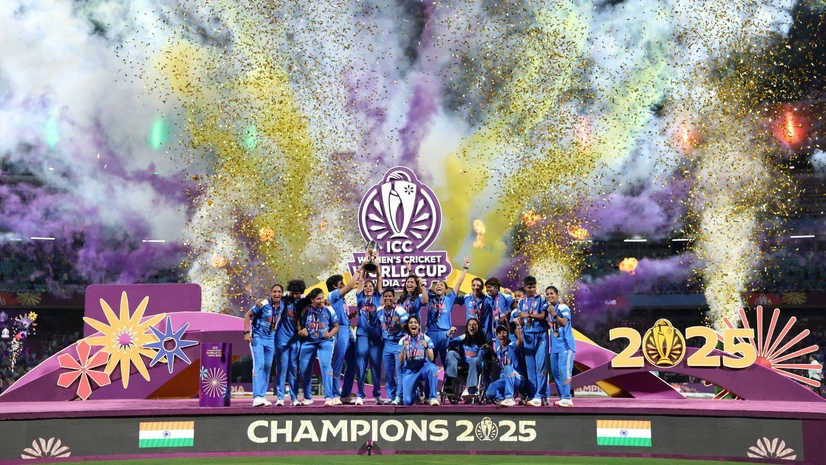
Chandigarh, Nov 3: The night belonged to Harmanpreet Kaur — her leap, her catch, and the roar that sealed India’s first Women’s World Cup title. But that night’s story began long before the lights of DY Patil Stadium. It began in October 2022, when the BCCI quietly decided that India’s women would no longer be paid less than its men.
For the first time, match fees were equal — ₹15 lakh for a Test, ₹6 lakh for an ODI, ₹3 lakh for a T20. On paper, it was a number. In reality, it was a revolution.
Critics called it idealistic. Supporters called it overdue. Yet what the skeptics missed was what the board understood early: parity is not a prize for success — it’s the soil where success takes root.
That one policy unlocked something far greater than money. Players no longer needed to juggle jobs, worry about travel allowances, or play through injury without support. They trained with full-time coaches, nutritionists, and analysts. They could dream in peace.
“Equal pay gave us security,” said a senior player. “But more than that, it gave us respect. It told us we were no longer an afterthought.”
Slowly, the transformation became visible. Fielding drills grew intense, fitness standards matched the men’s team, and the Women’s Premier League brought visibility and validation. Girls across India saw a profession, not a pastime.
When India lifted the trophy, the connection between equality and excellence was no longer philosophical — it was physical. “Confidence comes when the system stands behind you,” said former captain Mithali Raj. “Equal pay wasn’t charity. It was acknowledgment.”
The BCCI’s bold call has since shaped global conversations around gender in sport. Where others fought legal battles for parity, India’s approach showed how proactive policy could create results faster than lawsuits.
In the years to come, historians may look back and trace India’s golden age of women’s cricket to one quiet press release. A line of text that told a generation of players — you don’t have to be heroes just to be equals.
When Harmanpreet lifted that trophy, the cheers were for victory. But the echo that followed was for justice — done quietly, and repaid in gold.
