
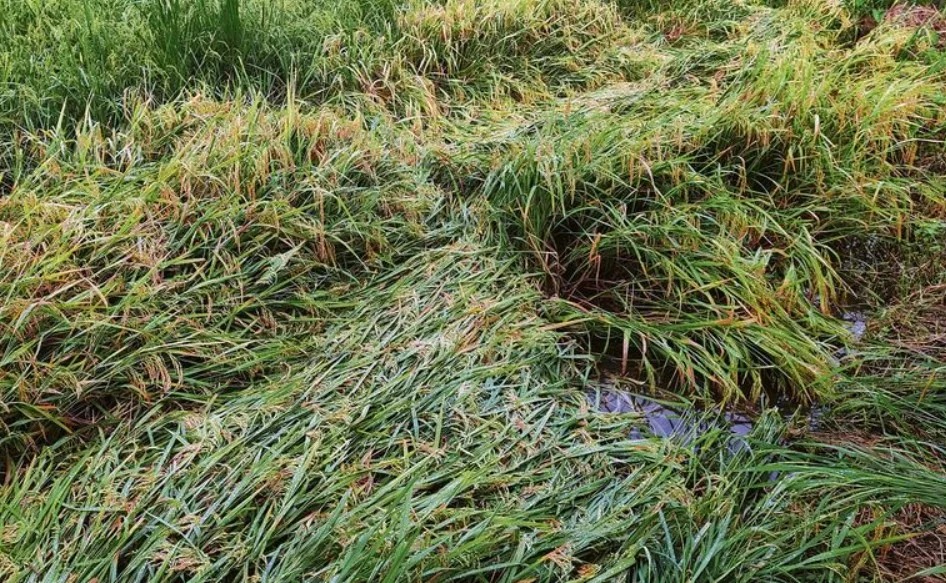
Malwa, April 5: Standing wheat and fodder crops across the Malwa belt faced fresh devastation Saturday as hailstorms and heavy rain swept through the region. The India Meteorological Department has issued a forecast indicating that the unstable weather pattern is likely to persist on April 6 and 7, further complicating the outlook for farmers in Abohar and Bathinda.
The recent weather activity follows a severe hailstorm on March 31 that flattened crops in dozens of villages. In Fazilka alone, approximately 39,747 acres of farmland have been impacted by the recurring storms over the past week.
“Crops across 16,085 hectares in the 44 villages suffered damage ranging from 20 to 80 per cent as per reports,” Harpreet Pal Kaur, the Fazilka Chief Agriculture Officer, maintained.
While the state government has initiated a special girdawari to document the losses, agricultural leaders stated that immediate relief is essential to prevent a total economic collapse for rural households. During a visit to hard-hit villages like Islamwala, union representatives noted that the flattened wheat requires urgent assessment.
“The standing wheat crop has been damaged,” Nishan Singh, president of the Bhartiya Kisan Union (Kadian), asserted. Singh declared that the government must provide Rs 50,000 per acre to compensate for the loss of the harvest-ready grain.
The demand for higher compensation was echoed by opposition leaders who stated that previous flood-related dues remain pending. Sukhbir Singh Badal, president of the Shiromani Akali Dal, affirmed that the current situation in Fazilka and Muktsar Sahib is critical.
“Now, they are again appealing for compensation for widespread damage to standing wheat crop,” Badal declared, noting that the agricultural sector has faced consecutive seasons of weather-related setbacks.
Local authorities, including Additional Deputy Commissioner Mandeep Kaur, affirmed that the administration is moving forward with the assessment process as per the directives provided by the Chief Minister during his April 2 visit to the region.
