
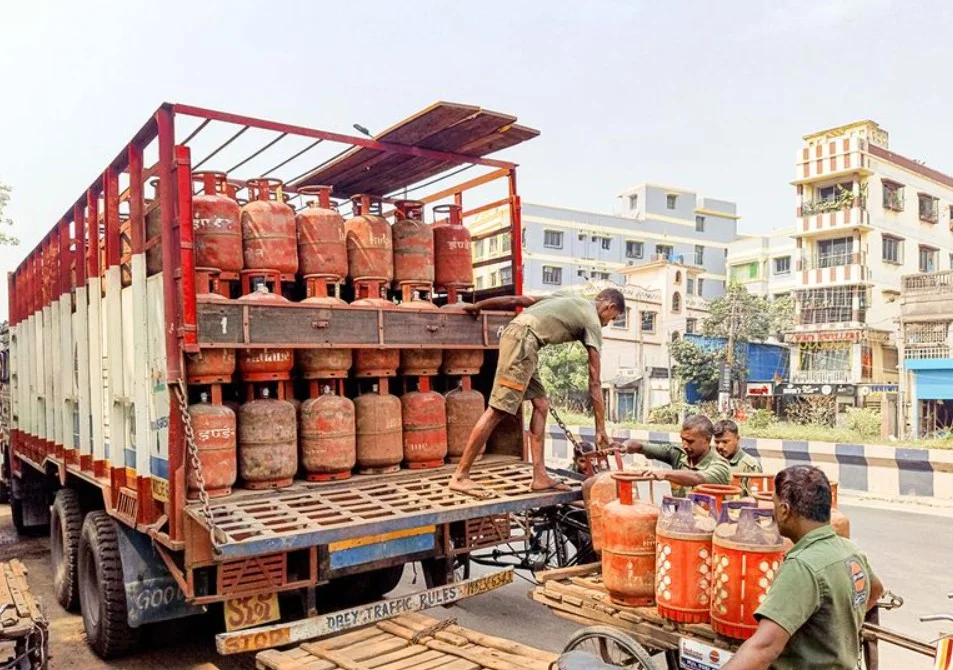
NEW DELHI, JUNE 6: State-owned oil marketing firms increased the price of domestic cooking gas by 29 rupees per cylinder, citing elevated global energy procurement costs. The adjustment drives the price of a 14.2-kilogram LPG cylinder up to 942 rupees in the national capital, continuing a broader upward trend in domestic utility pricing.
The pricing change marks the second major adjustment since early spring, following a larger 60-rupee increase on March 7 that was brought on by supply line disruptions in West Asia. Market data reveals that state retailers were absorbing losses of nearly 703 rupees per cylinder before the current adjustment took effect, as retail pricing has struggled to keep pace with volatile international trends.
The higher utility bills arrive alongside widespread increases across the transport fuel sector. Since mid-May, combined petrol and diesel rates have climbed by 7.5 rupees per liter, while compressed natural gas prices rose by roughly 6 rupees per kilogram. Even with these consumer price increases, energy enterprises continue to experience under-recoveries of about 11 rupees per liter on petrol and 33.6 rupees per liter on diesel.
To protect household budgets from extreme market fluctuations, the government has avoided passing the total financial burden directly onto the public. Instead, state retailers continue to absorb a significant percentage of the international price hikes while global crude markets stabilize.
Market sources asserted that regional conflicts have directly impacted local energy economics. They stated that the pricing changes are a direct response to prolonged external pressures.
“State-run oil marketing companies were estimated to be losing about 703 rupees on every LPG cylinder sold before the latest revision,” an industry insider declared. “The government has so far avoided a full pass-through of higher international energy prices to consumers.”
Analysts affirmed that while retail prices are rising, the financial buffer provided by state intervention remains a critical factor in stabilizing the domestic economy against overseas supply shocks.
