
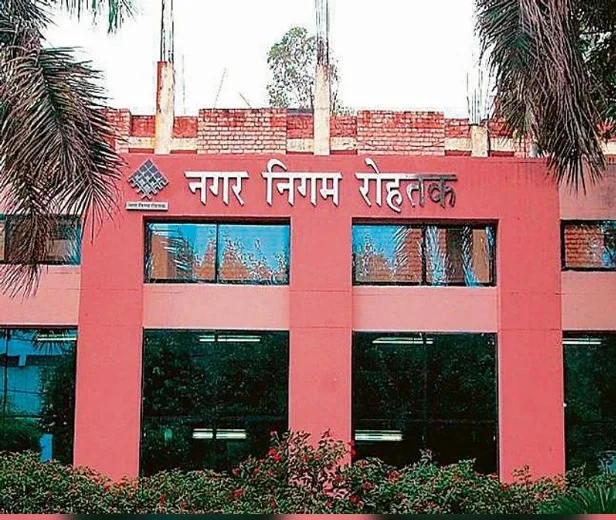
Rohtak, June 10: Public walls in Rohtak are being fitted with mirrors in a creative municipal campaign designed to shame open urinators and litterers into using designated public facilities. The Rohtak Municipal Corporation completed the initial installation at the Sheela Bypass on a heavily traveled pedestrian route where expensive civic artwork and murals were being continuously damaged by unhygienic public behavior.
The corporation affirmed that the mirror implementation is a cost-effective method to preserve community spaces and maintain pedestrian comfort. Government representatives stated that confronting individuals with their own image while they are violating civic codes creates an effective deterrent that standard warning signs fail to achieve.
“We hope the mirror will act as a silent deterrent and encourage citizens to use nearby toilet facilities instead,” Municipal Commissioner Narendra Kumar stated regarding the sanitation drive. “Despite the availability of these facilities, some residents continue to resort to open urination, posing challenges to sanitation and urban aesthetics.”
Kumar noted that structural availability is not the primary issue, as the city manages a network of over 90 fully functioning public toilets. He stated that the problem stems from a lack of civic discipline, which the municipal corporation is attempting to rectify through modified social design rather than punitive fines.
The administration noted that similar interventions are currently being planned for several highly congested sectors beneath regional overpasses. Government sources stated that areas near the Old ITI Ground and various points flanking Jind Road have been mapped for subsequent mirror placements due to persistent sanitation complaints from local shopkeepers.
The project highlights a shifting trend in local governance toward active behavioral management to resolve long-standing cleanliness issues. Restroom maintenance teams stated that keeping public spaces clean requires active participation from residents, and the new reflective barriers serve as a constant reminder of personal accountability in shared urban zones.
